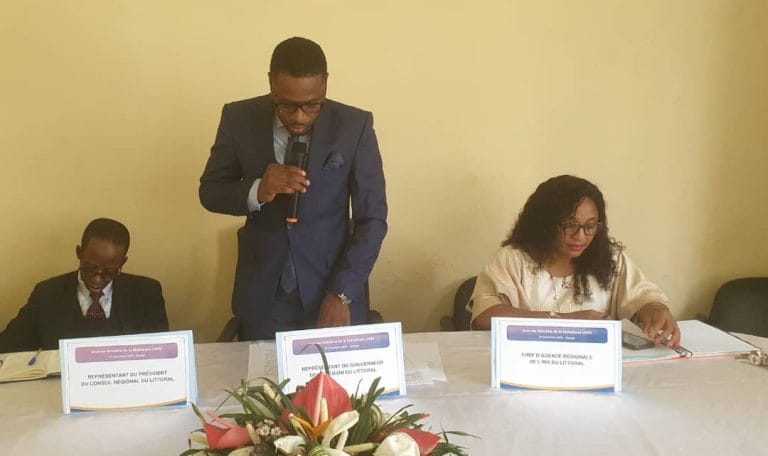
The need to institutionalise reliable statistics in the water and sanitation sector took centre stage in Douala on Wednesday, November 18, 2026, as the National Institute of Statistics (INS) joined stakeholders to commemorate the 36th edition of African Statistics Day.Held under the theme, “Institutionalising Statistics on Water and Sanitation to Ensure Sustainable and Climate-Resilient Development in Africa,” the event ga an opportunity for stakeholders to examine how accurate and timely data can support development planning, policy implementation and responses to climate related challenges.According to the Head of the INS Regional Agency for the Littoral, Christelle Tchoua, effective water and sanitation policies must be backed by reliable indicators capable of measuring their actual impact on the population. She said formulating policies alone is insufficient without appropriate mechanisms to assess their implementation and determine whether they are improving people’s living conditions. “We wanted to highlight a specific sector so that we can measure development initiatives,” she explained, adding that detailed statistical information enables decision makers to identify priority needs, allocate resources appropriately and ensure that no population group is left behind. She emphasised on monitoring household access to drinking water and adequate sanitation facilities, especially in the face of climate change, prolonged droughts and growing pressure on available water resources.The INS identified three key indicators for assessing progress in the sector. These include the number of households with reliable daily access to water, the proportion of the population using protected water sources supported by appropriate infrastructure, and the percentage of households with access to adequate, nonshared toilet facilities. She that these indicators would provide a clearer understanding of how environmental challenges affect communities and their access to essential services.The discussions also highlighted the importance of statistical monitoring in achieving the objectives of Cameroon’s National Development Strategy 2020–2030 (SND30), which targets universal access to drinking water.

To attain this ambition, the INS underscored the need for regular assessment of progress, identification of existing shortcomings and evaluation of interventions undertaken by public authorities.The 36th African Statistics Day thus provided an opportunity to reinforce collaboration among institutions and promote the use of statistical evidence in addressing development challenges. Beyond the collection and production of figures, the INS maintained that statistics should serve as practical instruments for decision-making, accountability and effective resource management.


Leave a Reply