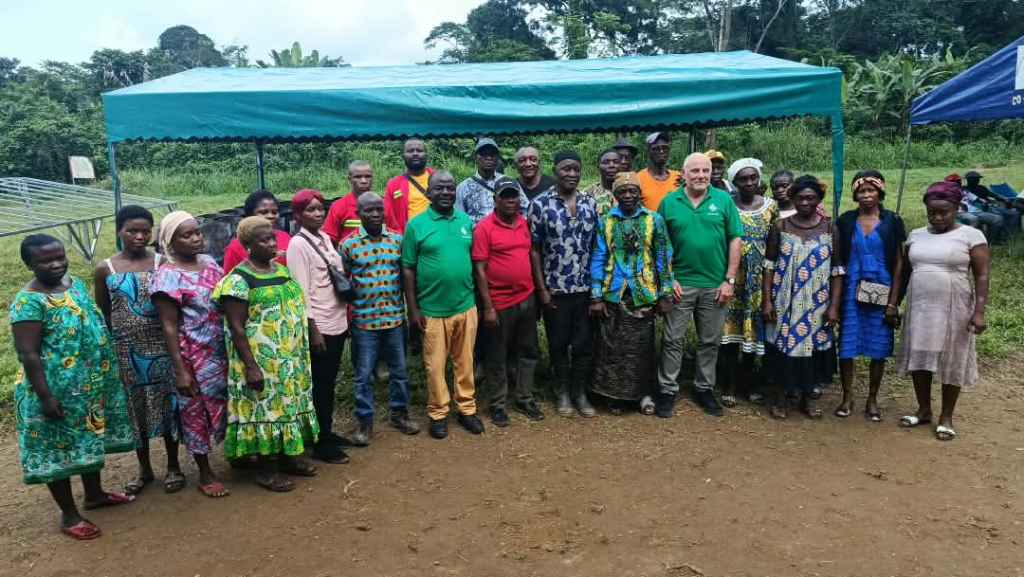
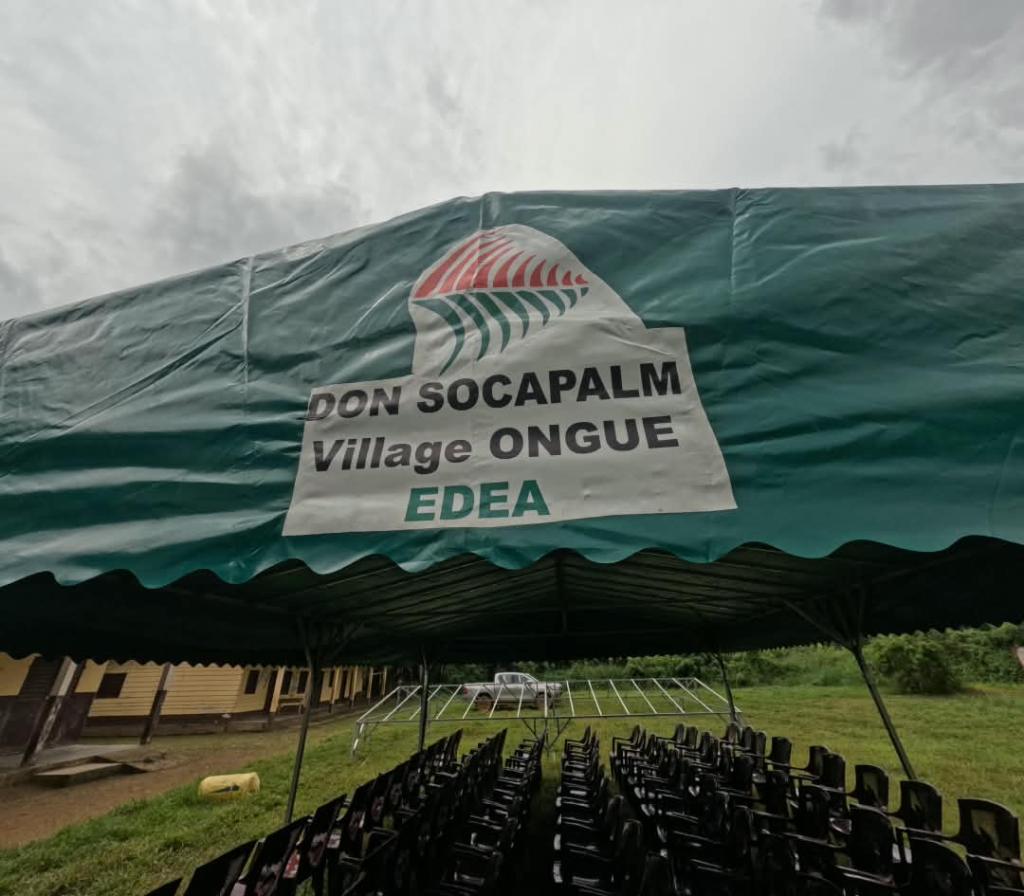
It was a happy Friday, October 23, 2026, as palm oil producer Socapalm officially handed over a significant material support to the village of Ongue, located in the Edea 1 Subdivision of the Sanaga-Maritime Division.The donation directly requested by the community aims to facilitate local gatherings, foster self-sustaining economic initiatives, and strengthen relations between the company and neighbouring populations. Under clear, pleasant skies, the public school in Ongue hosted a ceremony to mark the official handover of two brand-new, 100-capacity event tents and 100 plastic chairs. For residents, the donation comes as a welcome relief, solving a long-standing logistical challenge. Organising community meetings, traditional ceremonies, or funerals in Ongue previously required renting equipment from distant towns. This process imposed heavy transportation costs and frequent logistical delays. With dedicated equipment now available directly within the village, local organizers can plan events with greater peace of mind. Beyond immediate convenience, the community plans to turn the donation into an ongoing source of local revenue. By renting the tents and chairs out for local functions, the village intends to generate funds to finance future community projects creating a self-sustaining cycle of local empowerment. Behind the gesture is a structured Corporate Social Responsibility (CSR) strategy aimed at addressing community-identified needs through structured dialogue and actionable support. The initiative stems from consultations held earlier this year to pinpoint priority needs across neighboring villages. In May, a tripartite meeting brought together company representatives, local leaders, and administrative officials. “Bipartite meetings, organized in accordance with Roundtable on Sustainable Palm Oil (RSPO) certification standards, serve primarily to gather the concerns of local populations and prepare for discussions with the administration,” explained Tang Charles, Environment and Sustainable Development Correspondent (CEDD) at Socapalm Edea. Under the framework, an annual allocation of 2 million CFA francs is designated for each of the four participating villages. Each community selects its own priority project and establishes a local management committee to oversee execution. In Ongue, leaders selected event equipment with the goal of reinvesting rental profits to expand their inventory over time. “This equipment will not only generate income for us, but could eventually allow us to purchase three, five, or six more tarpaulins,” said Bingabole Jérémie, Secretary-General of the village traditional council.
Local authorities and village notables expressed strong satisfaction with both the physical equipment and the collaborative process. “Today, Socapalm has made things much easier for us. Everything is right here on-site,” noted Nzamouhe Daniel, Vice-President of the Ongue village community. Chief Nkone Etienne of Ongue,emphasized the broader value of ongoing engagement with the Socapalm: “This project is an opportunity to bolster the resources available for local development. Regular dialogue helps maintain a positive relationship and find practical solutions to our community’s concerns.” Tonye Jacques Félix, a village notable and management committee member, echoed the sentiment, highlighting the open communication channels: “Everyone has the chance to express their expectations and listen to those of others.” Nevertheless, with the equipment now delivered, the focus shifts to management, routine maintenance, and financial transparency. Jean Laurent Dissouke, President of the Customary Court and member of the management committee, stressed the importance of stewardship: “We must preserve this equipment as a legacy for future generations.” For Socapalm, the project demonstrates how CSR commitments can produce tangible benefits on the ground. For Ongue, it delivers immediate utility while opening new avenues for community-led economic development. The long-term success of the initiative will serve as a potential model for similar community projects across host communities of Socapalm plantations in Cameroon.


Leave a Reply