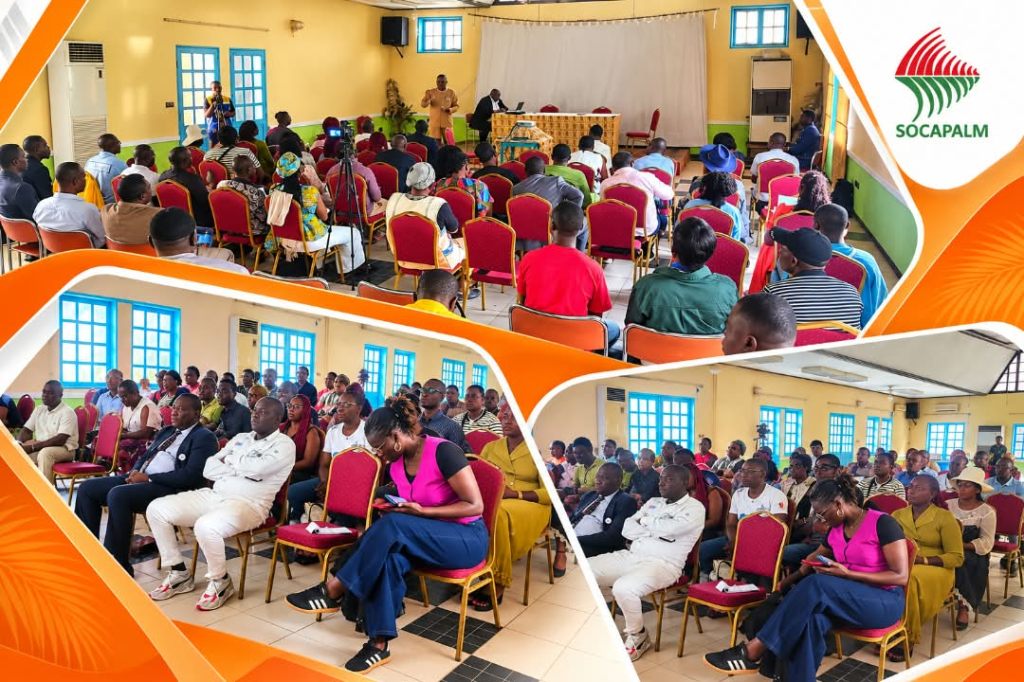
Workers from Socapalm plantations across Mbambou, Mbongo, Edea, and Kienké joined trade union leaders and institutional representatives in Kribi on October 7, 2026, to celebrate the World Day for Decent Work. Organized by the Confederation of Autonomous Trade Unions of Cameroon (CSAC), the event focused on defending workers’ rights, fostering constructive social dialogue, and tangibly improving workplace conditions.”Decent work is not a slogan, decent work is not an advertisement it is a reality.”This declaration by Joseph Mikou, President of CSAC, captured the core spirit of the gathering. Around him, participants engaged in candid discussions about safety, employee protection, and the collective responsibility of all stakeholders to build healthier labor relations.The strong presence of Socapalm employees gave the event grounded authenticity, bringing the voices of front-line workers directly into the dialogue.The day’s proceedings were structured around three key presentations. Opening the discussions, union representative Brice Ngotzok addressed a vital question:Where do we stand in concrete terms?Ngotzok argued that Cameroon’s formal commitments to decent work must be continuously measured against everyday professional realities. Linking workplace standards directly to the nation’s vision for emergence by 2035, he stated:”Decent work is fundamental to development itself it lies at the very heart of emergence.”He urged stakeholders to treat October 7 not as a passive annual commemoration, but as an active day of mobilization, active listening, and tangible policy enforcement.Shifting the focus to employment access and sustainability, Ndassa Njoya, representative of the National Employment Fund (FNE), detailed the mechanisms of “dynamic intermediation”a process designed to bridge the gap between businesses and job seekers.Njoya emphasized that the FNE’s mandate extends well beyond job placement. Through structured post-placement monitoring, the agency conducts ongoing workplace verifications to ensure recruits operate in safe, compliant, and supportive environments. Additionally, FNE’s self-employment initiatives continue to complement these efforts by fostering local entrepreneurship.Beyond employment access, safeguarding fundamental rights remained central to the event’s agenda. CSAC President Joseph Mikou reiterated the critical role unions play in ensuring compliance with the Labor Code, international labor standards, and adequate social protection measures.
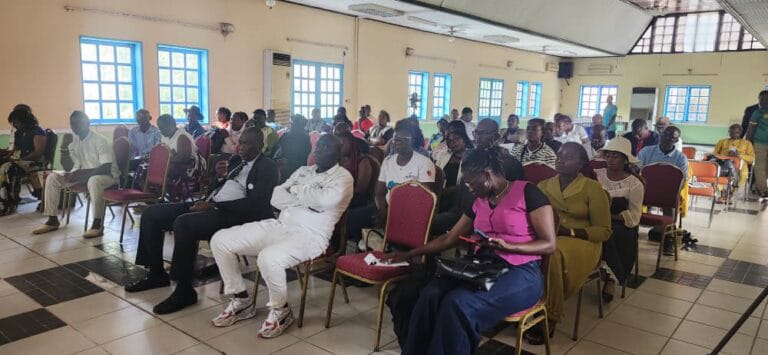
Mikou highlighted social dialogue as the primary tool for conflict prevention and workplace improvement. He emphasized that for true progress to occur, these protections must extend equally to female workers.Reinforcing this point, Clémentine Zintsem, President of the CSAC Women’s Committee in Kribi, delivered a powerful appeal for genuine gender representation at decision-making levels:”Women demand to be at the negotiating table. We cannot talk about decent work for women if they themselves are not present during negotiations.”Zintsem stressed that key issues such as maternity protections, family responsibilities, and equal pay must be formally embedded into collective bargaining agreements and corporate policies.Acknowledging the collaborative effort required to host such a gathering, Mbeya Pierre, Regional President of CSAC for the South Region, commended the strong turnout of union delegations and corporate sponsors.”Today, Kribi and the entire South Region are honored and recognized,” Pierre noted.Socapalm’s active engagement demonstrated by facilitating the attendance of employees from multiple operating sites underscores its commitment to open social dialogue. By encouraging its workforce to participate in trade union forums, the company reinforces its dedication to addressing professional concerns and maintaining a fair, transparent working culture.


Leave a Reply