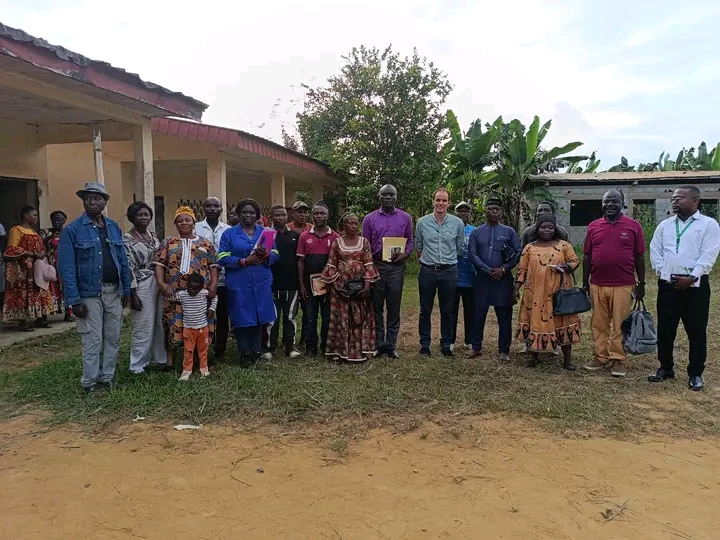
From Kienké to Édéa, and across Dibombari, Mbongo, and Mbambou,Société Camerounaise de Palmeraies (Socapalm) launched an extensive consultation tour in September 2026. Combining bipartite community discussions and high-level tripartite platforms, the initiative brought company executives, regional authorities, and local traditional leaders together to address critical issues spanning land rights, local employment, social infrastructure, security, and corporate transparency.
Land issues dominated discussions across all forums. Socapalm reaffirmed the regulatory framework stipulating that decision-making authority rests solely with the Ministry of State Property, Surveys, and Land Affairs, while confirming that technical teams are currently working to demarcate concession boundaries. Only active production areas will remain within the company’s portfolio; surplus land particularly unplanted plots and riverbanks will be returned to the State domain for local reintegration.
The land registry confirmed technical mapping was complete, but several traditional leaders contested physical boundary markers. Prioritizing consensus, regional authorities halted formal validation of the cadastral plan until all objections are reviewed. As the prefect’s representative noted, “All parties must reach an agreement before the official record is signed.”Community members requested the return of specific land parcels for youth agricultural projects. Traditional Chief Mikangue Jean Marie acknowledged a positive shift in company relations moving “from a period of mistrust to a more open dialogue” while emphasizing that land access remains vital for his village. The Bomono Gare community claimed 600 hectares, referencing a previous 2,500-hectare commitment discussed in January 2025. Stakeholders agreed to convene a dedicated tripartite meeting before the end of 2026 to resolve the claim.
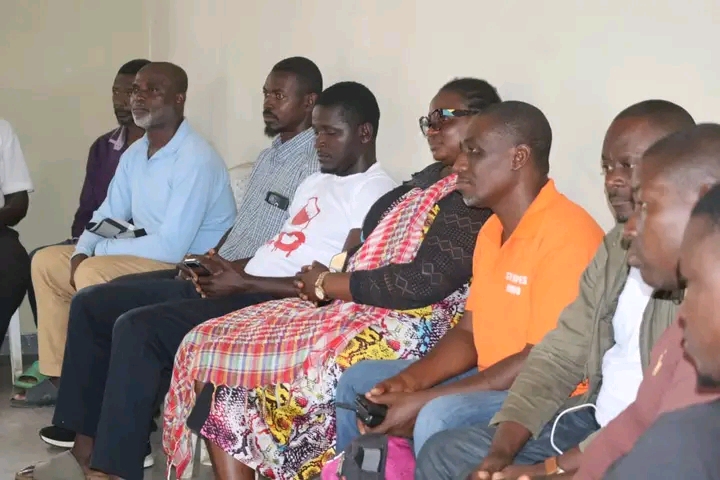
Consultations signaled a shift away from scattered aid toward sustainable infrastructure and collective investment:
In the Sanaga-Maritime region, the traditional rulers of Déhané, Mpongo, and Koukoué pooled their individual 2 million CFA franc allocations into a joint 6 million CFA franc fund to finance large-scale projects, including livestock, aquaculture, community centers, and water wells. In Kienké, 18 million CFA francs allocated for 2026 was redirected from seasonal agricultural inputs into durable equipment—specifically generators and brush cutters for each community. Progress varied across villages. Bomono Ba Mbengue celebrated a water tower inaugurated in June 2025 (currently awaiting final network connection), while neighboring Bomono Gare, Nkende, and Mbonjo outlined new pipeline and farm development plans. Dialogue in Bidou 2 focused on ongoing electrification efforts.In Mbimbe, discussions concluded with a clear roadmap: a prefectural decree prohibiting illegal artisanal oil presses, the completion of Socapalm water/electricity projects, and the creation of local village committees to oversee micro-project management.
Dialogue extended directly to employment grievances.Local Hiring & Young residents raised concerns over job availability and communication gaps regarding openings. While Koukoué welcomed expanded recruitment parameters, leaders in Nkende voiced concerns over local preference in piecework hiring. Socapalm disputed allegations of bias, reiterating that recruitment depends strictly on operational needs, but pledged to review specific cases with executive leadership.Security Support Vigilance committees acknowledged communication kits and safety equipment supplied by Socapalm following a March 2026 crisis meeting. On-site property security has officially transitioned to provider DAK, succeeding Africa Security. Joint strategies were also formulated to combat palm nut theft. Grievance Tracking Socapalm highlighted its migration to ulula the Socfin group’s centralized grievance platform. Accessible via WhatsApp, QR code, or toll-free hotline, the system assigns unique tracking numbers to log, process, and address complaints confidentially within strict time frames. Sustainability Standards The company reaffirmed adherence to ISO 14001 and RSPO (Roundtable on Sustainable Palm Oil) standards, emphasizing high conservation value (HCV) area protection, riverbank preservation, and effluent management in dedicated lagoon systems.
The September 2026 consultations established a two-tiered structure for long-term resolution: bipartite village meetings served as open listening forums for hyper-local concerns, while regional tripartite meetings—chaired by the SDO of the Ocean and Sanaga-Maritime Divisions acted as official arbitration bodies to codify grievances into binding commitments.
Moving forward, Socapalm plans to consolidate operations around security, workforce development, social dialogue, and environmental stewardship with success measured by how swiftly these consultation commitments translate into visible results on the ground.


Leave a comment