Accessibility, mobility, employment, and civic participation remain major hurdles for persons with disabilities in Douala. These findings were unveiled on September 17, 2026, during a workshop at the Bépanda CMB to present the Advocacy Project for an Inclusive Douala (PAI). The event brought together key institutional stakeholders, including officials from Douala’s five mainland borough councils, the Douala City Council, and the Littoral Regional Council.
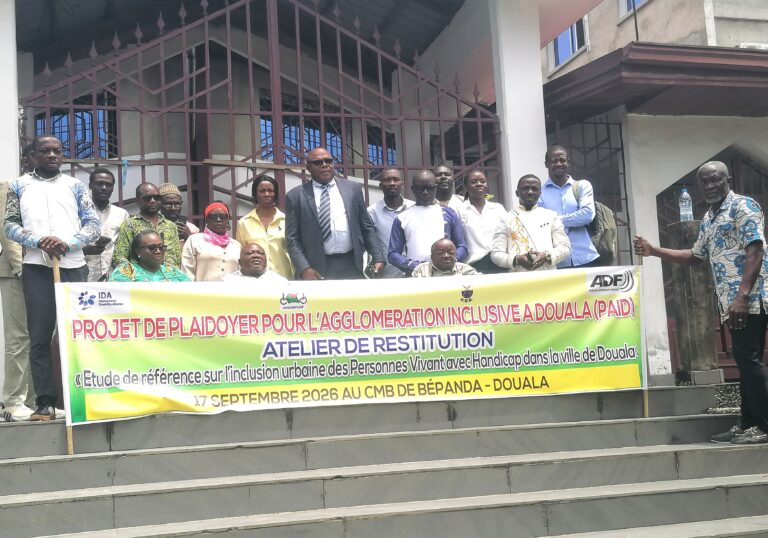
Presented by project management consultant Timack Charles Bertin, the baseline study highlights critical gaps in local infrastructure and governance:
Most public buildings remain inaccessible. Where adaptations exist, they rarely meet official technical standards.A lack of sign language support and adapted signage in public facilities isolates individuals with hearing impairments, forcing them to rely on third parties for basic services.Persons with disabilities remain largely excluded from the urban planning decisions that directly impact their daily lives. Bertin emphasised that municipal inclusion is a legal obligation under Cameroon’s international and national commitments, requiring immediate action across education, employment, and public transit. Jean-Pierre Fopa, Executive President of the National Association of Young People with Disabilities in Cameroon, stressed the daily struggle of navigating a city dominated by motorcycle taxis and inaccessible public transit. Through the PAI project, civil society leaders aim to turn institutional dialogue into concrete policy. By directly engaging local councils and the Douala city council, advocates are pushing for long-term investments in universal design, accessible public services, and inclusive policy development across the economic capital.
 Visionary Reports
Leave a comment