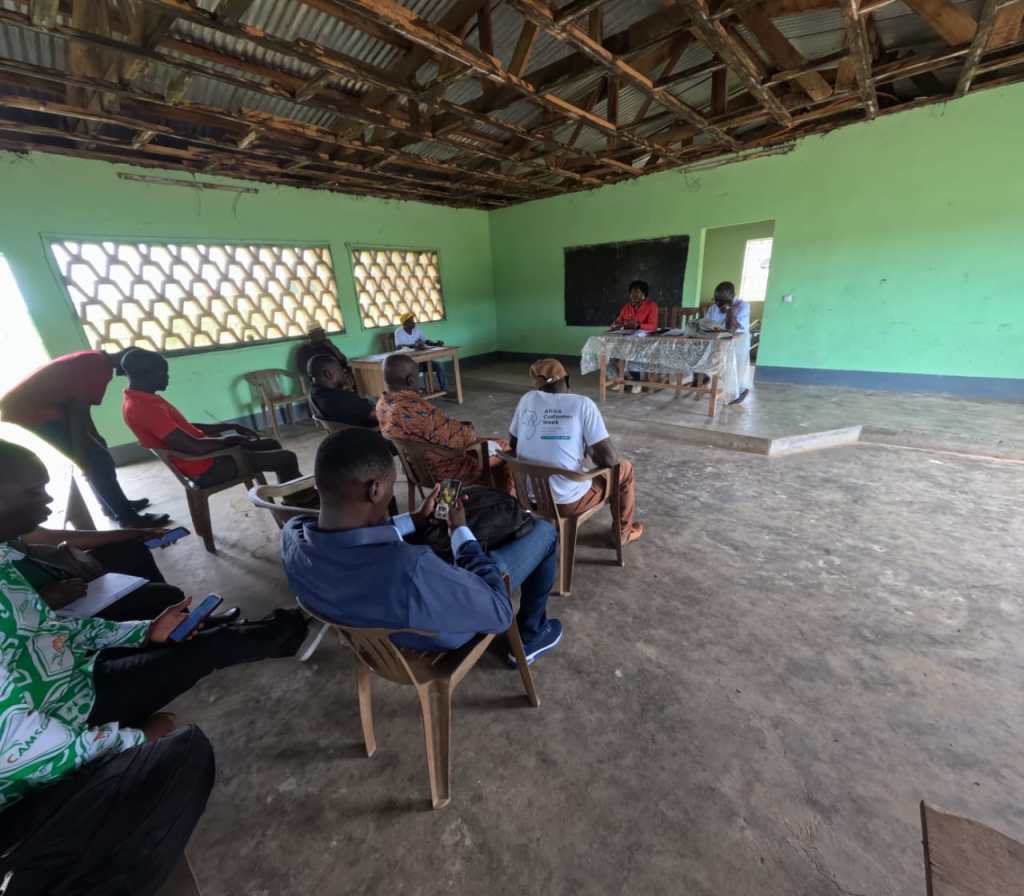
SOCAPALM has launched its 2026 annual consultative caravan across local host communities, beginning with a series of bilateral talks in the Sanaga Maritime and Mungo Divisions of the Littoral region. Scheduled to run through September 30 across the Edea, Dibombari, Mbongo, Mbambou, and Kienké plantation sites, the outreach framework provides a structured platform for corporate management and neighboring villages to evaluate shared commitments, review local development initiatives, and address operational disputes. The 2026 campaign also served as the official introduction for Bart Buytaert, the newly appointed Plantation Manager for Socapalm’s Edéa site, alongside new community liaison leadership.
Déhanè (September 7, 2026): Discussions focused on land availability, social infrastructure, and local governance. Chief Mikangue Jean-Marie highlighted growing internal village tensions driven by land constraints, with residents urgently requesting the return of vital land to expand agricultural activities beyond basic trading. Minutes from the previous meeting on June 2, 2026, confirmed that formal land restitution had been agreed upon, with a land survey team slated to demarcate official boundaries. Community leaders also requested direct corporate funding to cover salaries for three local primary school teachers and Koukouè (September 8, 2026):Hosted at the residence of His Majesty Mbahè Carnet Benjamin, meetings centered on health services, youth employment, and resource allocation. Management clarified guidelines regarding emergency care access at Socapalm’s corporate medical facilities, while community representatives requested expanded internships, micro-project support, and direct hiring opportunities. To maximize the impact of corporate social investments, the villages of Koukouè, Déhanè, and Apouh agreed to pool their annual community project budgets. By combining their individual allocations of 2,000,000 FCFA into a joint, rotational fund of 6,000,000 FCFA, the communities plan to construct higher-value infrastructure, such as community halls, boreholes, or sustainable livestock initiatives. Meanwhile,the caravan subsequently moved to the Dibombari Subdivision in the Mungo Division on September 9, visiting seven host villages: Mbonjo 1, Mbonjo 2, Souza, Nkende, Bomono Ba Mbenge, Bomono Gare, and Bomono Jedu. Marking the final stop of the Dibombari tour, a bipartite dialogue took place at the Chief’s Palace between Socapalm’s Corporate Communications team, led by Emmanuel Ngang, and local community representatives. The delegation was received warmly, reflecting an improving relationship between the enterprise and its host populations.
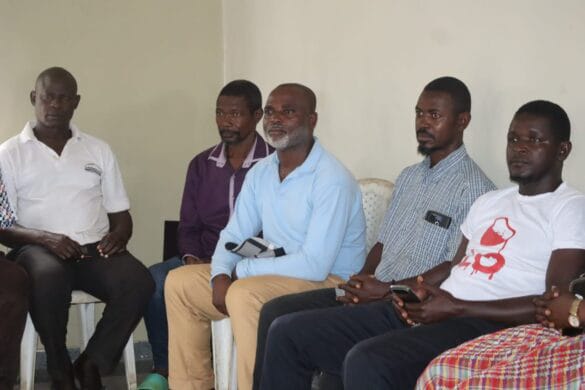
Discussions centered on the 2026 social project, with residents identifying a clean drinking water system as their primary need. Although the estimated cost of the water project exceeded the initial budget, community representatives agreed to adjust the project’s scope to align with available corporate funding. Socapalm officials also presented updated internal procedures designed to boost transparency and stakeholder communication. It should be noted that, across all stops, traditional leaders and corporate managers noted significant improvements in direct dialogue and accessibility compared to prior years. However, resolving land boundaries and restoring space for local farming remain pressing priorities. Host communities continue to request improved access to healthcare, clean water, electricity, and educational support, increasingly favoring pooled, rotational funding models to execute larger structural projects. The consultative caravan moves next to Mbambou and Mbongo, before concluding its regional tour on September 30, 2026.
 Visionary Reports
Leave a comment