
On Tuesday, September 15, 2026, the 27th Permanent Tripartite Platform convened in downtown Kribi, bringing together administrative authorities, Socapalm representatives, and traditional chiefs and notables from neighboring communities. Chaired by the Second Deputy Divisional Officer (representing the Senior Divisional Officer of Ocean Division), the session was attended by the Divisional Officers of Kribi I, Kribi II, Lokoundjé, and Niété. The platform focused on critical issues, including land rights, rural electrification, community projects, RSPO certification standards, and local security.
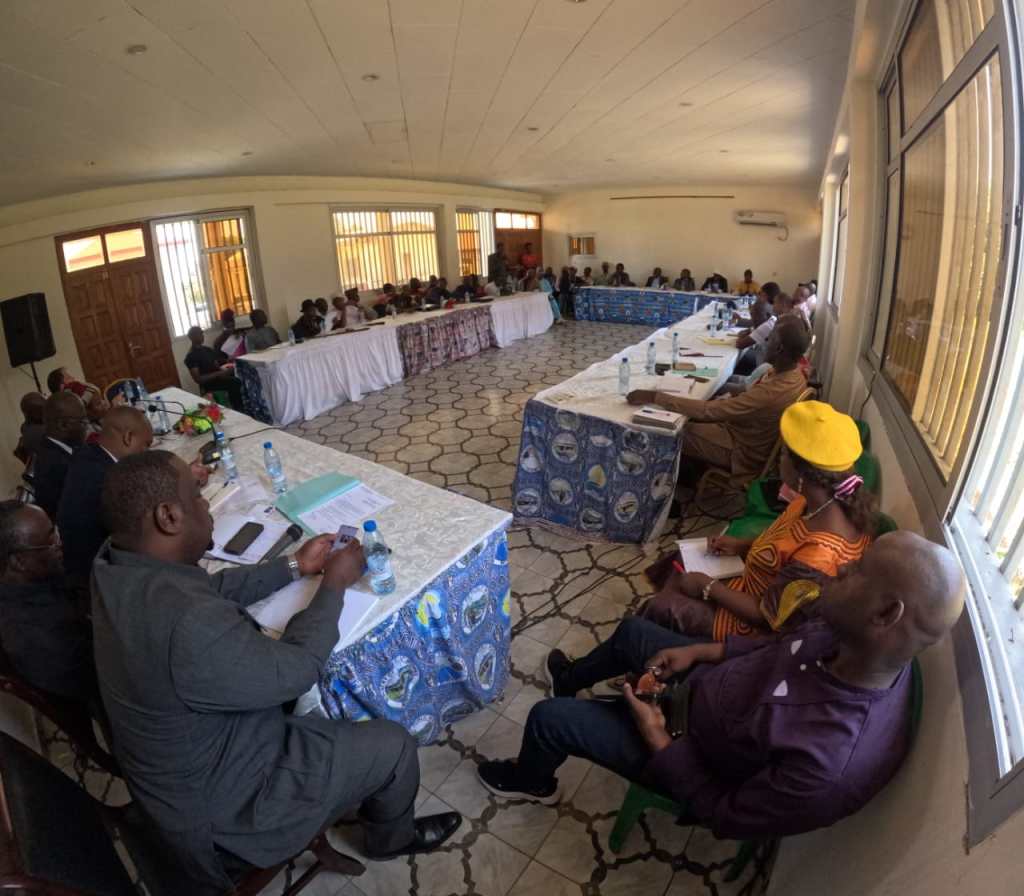
The meeting opened with the review, amendment, and unanimous adoption of the 26th session’s report, reinforcing the platform’s core mission: monitoring commitments and verifying field progress. Land tenure quickly dominated the discussions. Regarding the revision of concession boundaries, the land registry representative reported that technical assessments were complete. “Everything is ready on our side. A comprehensive site assessment has been conducted and signed off; all that remains is to forward the documentation to the divisional administration,” he explained.
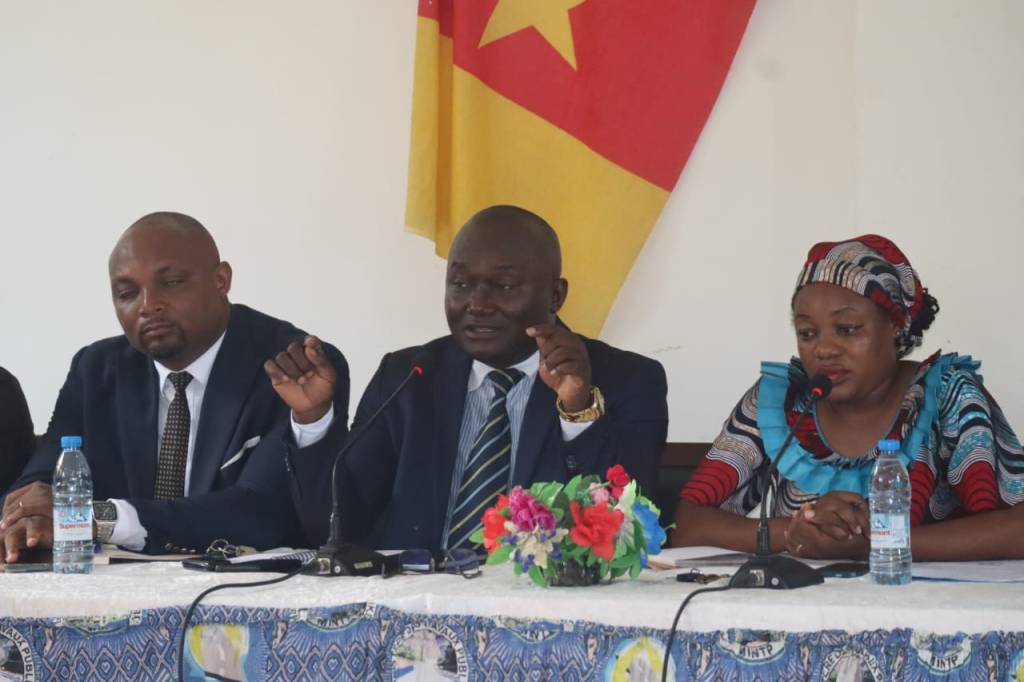
However, local leaders expressed skepticism, accusing the land registry of oversight. The Chief of Lendi, backed by fellow traditional rulers, directly disputed the placement of several boundary markers. To clarify the situation, the Divisional Officer of Kribi I reiterated the core principle mandated by MINDCAF: areas actively exploited by Socapalm under the current decree remain within the company’s perimeter, while unexploited lands must revert to the national domain. Responding to community pressure, the administration instructed the land registry to expedite the filing process while imposing a strict condition: no final approval will be granted until all local grievances are investigated. “All parties must reach a consensus before the official record is signed,” noted the chair. Socapalm’s Secretary-General reaffirmed the company’s commitment to land tenure transparency across all operational sites. Despite this, community leaders continue to describe unresolved land disputes as a primary “bone of contention.” Furthermore,discussions subsequently shifted to local development and living conditions: In Bidou 2, the CSAC presented progress on the local electrification project and ongoing negotiations with SOCADEL. The panel also reviewed community project outcomes for 2025 and set priorities for 2026.The updated Roundtable on Sustainable Palm Oil (RSPO) standards were introduced, focusing on human rights, local hiring, High Conservation Value (HCV) areas, and environmental protections. “We are committing to due diligence—evaluating all operations to address any potential human rights concerns,” stated a Socapalm representative.Under general business, Socapalm clarified that stray cattle damaging property do not belong to the company, which suffers losses from them as well. Additionally, widespread palm nut theft was highlighted as a security risk requiring joint administrative intervention. Local leaders acknowledged marked improvements in corporate-community relations. “At this table, we sit face-to-face, make decisions together, and find solutions together,” noted Cyrille Kadjong, a local notable. Chief Nguiebouri Joachim of Ribvuni added, “The Socapalm of today is not the Socapalm of yesterday. Significant progress has been made.” However, community leaders emphasized the need for better information flow to the grassroots level.
The meeting concluded with the introduction of the new manager for the Kienké plantation. Discussions will continue across the agricultural zones: a tripartite session was held on September 18 in Mbambou, and bipartite talks resume on Monday, September 21, across villages bordering the Kienké plantation to review community project outcomes. While expectations and disagreements remain, the platform demonstrates that trust is gradually being established through structured dialogue and verified field results.
 Visionary Reports
Leave a comment