
The Douala III Municipal Council convened on Monday, August 10, 2026, in its newly inaugurated Salomon Madiba Songuè auditorium to conduct its mid-term budget evaluation. Chaired by Mayor Valentin Epoupa Bossambo under the supervision of Syliac Marie Mvogo, SDO of the Wouri Division, the session evaluated financial performance for the first half of the year and set strategic priorities for the remainder of 2026.
Total Balanced Budget: 6.2 billion FCFA.Revenue Collection Rate: 44.5% (5.5 percentage points below the 50% mid-year target)Expenditure Execution Rate: 29.5% (as of July 30, 2026, based on authorized commitments)Transferred Powers Action Plan:2.13 billion FCFA (funded 65% by municipal funds, 23% by partnerships, and 12% by the Public Investment Budget) Addressing the councilors, Wouri SDO Syliac Marie Mvogo commended the municipal executive for its achievements despite fiscal hurdles. He highlighted the completion of the new auditorium as tangible proof of progress and praised the strong synergy within the council. “We are seeing this brand-new building for the first time, which demonstrates the tremendous work being done by the municipal executive. Despite the financial challenges, significant achievements have been recorded.
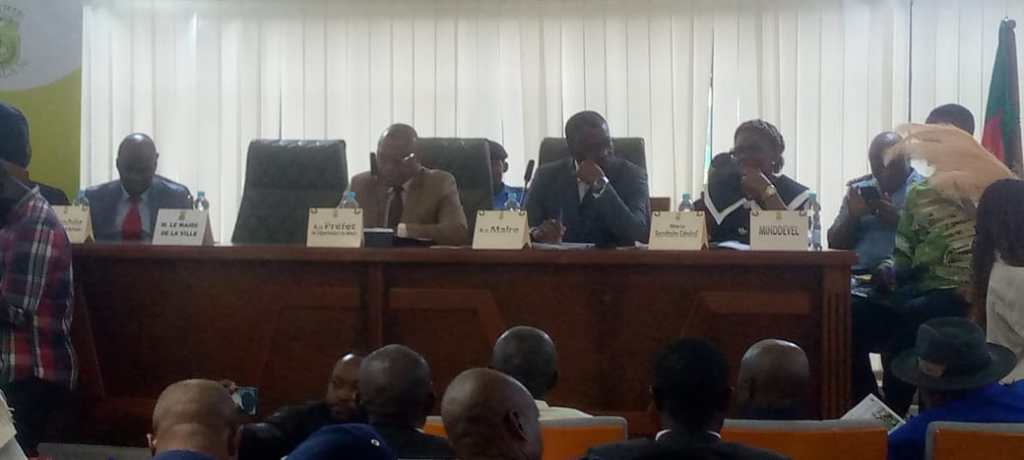
With this level of harmony and collaboration, the municipality can narrow the mid-term execution gap during the second half of the year.” Syliac Marie Mvogo, SDO of the Wouri Division.
Meanwhile,Mayor Valentin Epoupa Bossambo expressed confidence in turning around the shortfall before the end of the fiscal year. A core element of the growth strategy is the opening of a second local tax center, designed to boost collection of the General Simplified Tax (IGS)a crucial revenue stream for the council.
“We prioritize mandatory charges before settling other obligations,” explained Mayor Bossambo. “We are counting on this new local tax center to bridge the gap on our 6.2 billion FCFA budget. Incorporating uncollected surpluses, we aim to reach the 7 billion FCFA mark to fully meet our commitments.”
The council noted that municipal operations and transferred competencies remain heavily reliant on self-generated revenue, which accounts for nearly two-thirds of the funding for local powers. Council members concluded that improving financial performance through year-end will require two critical factors: Strengthened local collection via the new tax infrastructure and a Faster disbursement of the State’s General Decentralization Grant (DGD) and IGS revenues.


Leave a comment