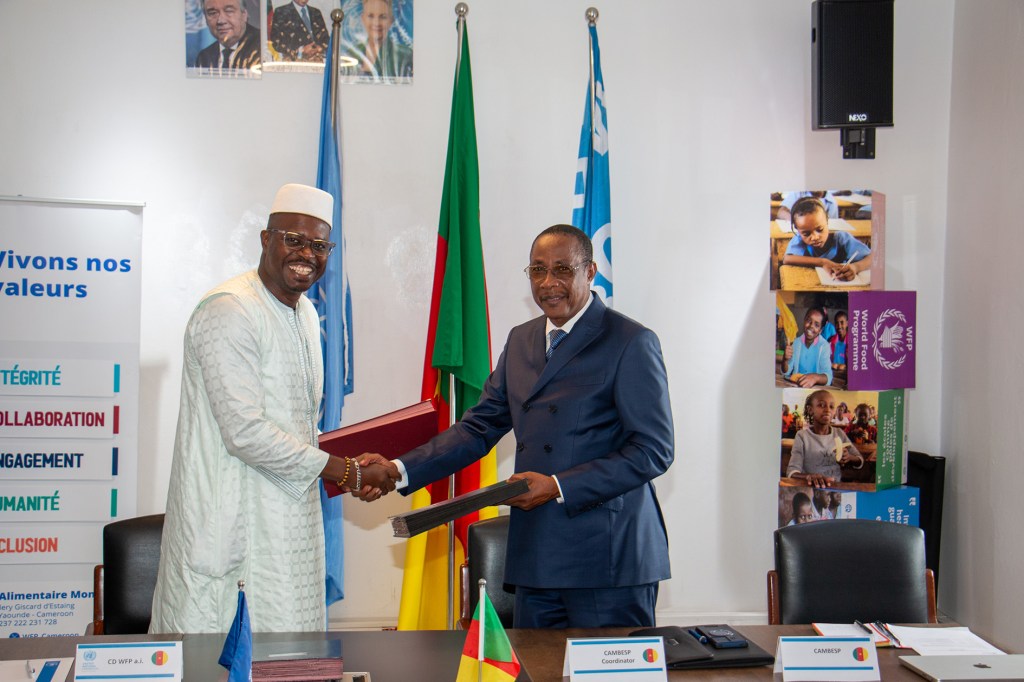
The Government of Cameroon and the United Nations World Food Programme (WFP) have signed a CFAF 2.36 billion contribution agreement to expand home-grown school feeding in the Adamawa, East and Far North regions, a move expected to improve children’s nutrition while boosting incomes for local farmers.
The agreement, signed on July 29, 2026, falls under the Cameroon Basic Education Support Project (CAMBESP) and is funded by the Global Partnership for Education (GPE) and the Islamic Development Bank (IsDB). The programme will run from 2026 to 2029, providing daily nutritious meals to nearly 11,000 pupils in ten public primary schools.
Beyond supporting schoolchildren, the initiative will create reliable market opportunities for about 600 smallholder farmers through local food procurement, strengthening rural livelihoods and promoting sustainable food systems in communities affected by food insecurity, displacement, climate change and economic hardship.
Speaking after the signing ceremony, Aboubacar Guindo, WFP Representative and Country Director ad interim in Cameroon, described school meals as an investment in children’s education and future.
“No child should have to learn on an empty stomach. Every school meal is an investment in education, nutrition and hope,” he said, noting that the programme will help children stay focused in class while supporting vulnerable families and local agricultural production.
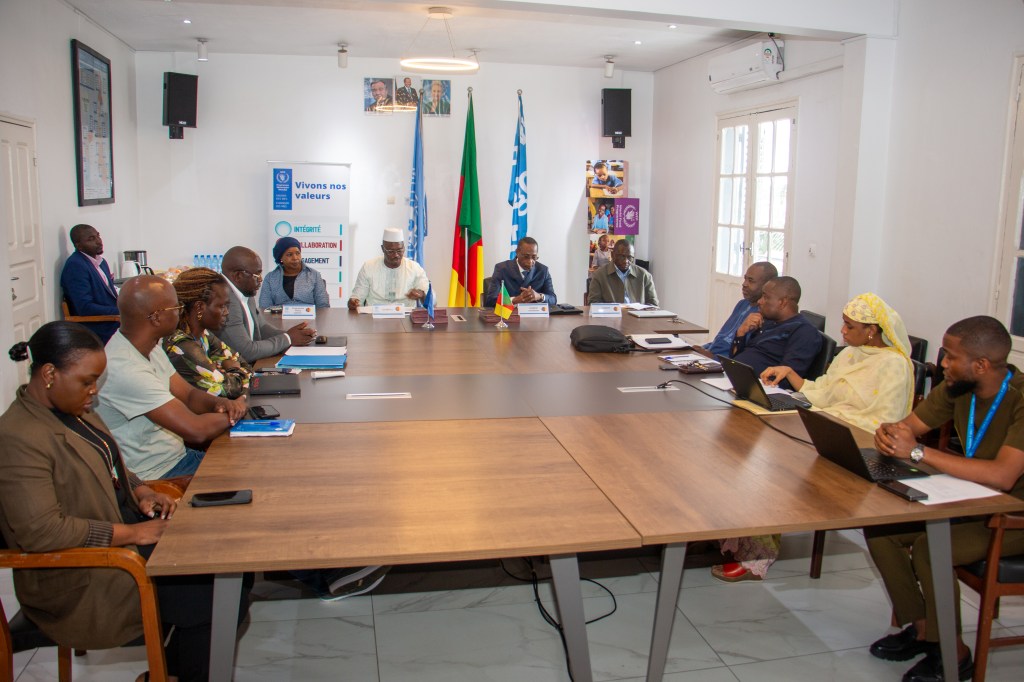
The Coordinator of the CAMBESP Project at the Ministry of Basic Education, Ousmanou Oumara, said access to nutritious meals removes barriers to education and helps children remain in school under better learning conditions.
As part of efforts to ensure sustainability, the programme will establish and train 10 school feeding management committees while providing technical assistance to farmer organisations and government institutions. More than 800 committee members, farmers and government officials are expected to benefit from capacity-building activities.
According to WFP, approximately 321,000 children currently benefit from school meals in Cameroon, about 11 percent of the country’s three million public primary school pupils. The government aims to increase that number to one million children by 2030, with continued support from WFP.
The UN agency also noted that it requires US$43.2 million over the next six months to sustain life-saving humanitarian assistance and resilience-building programmes across Cameroon, including the expansion of school feeding initiatives.
 Visionary Reports
Leave a comment