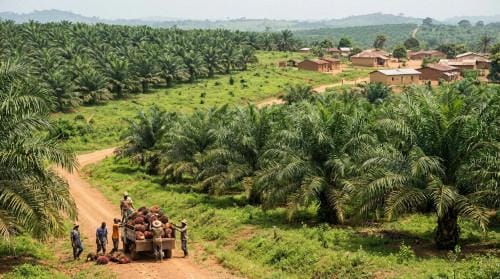
Socfinaf, the West and Central African subsidiary of the Luxembourg-headquartered Socfin Group, has published its 2025 Sustainability Statement. Prepared in alignment with the European Union’s Corporate Sustainability Reporting Directive (CSRD) and European Sustainability Reporting Standards (ESRS), the 188-page report highlights significant milestones in regional employment, wage standards, and environmental compliance with Cameroon playing a central role.
Cameroon represents the second-largest operational footprint across Socfinaf’s eight operating countries (Sierra Leone, Liberia, Côte d’Ivoire, Ghana, Nigeria, Cameroon, DRC, and São Tomé and Príncipe), trailing only Côte d’Ivoire (9,464 employees). Socapalm alone provides above 8000 jobs in Cameroon out of Socfinaf’s total global workforce of 25,853 (which includes 21,493 permanent staff and 4,360 day laborers, with a group-wide turnover rate of 26.34%).
Cameroon stands out within the group’s labor landscape:
Every employee at Socapalm is covered by a collective bargaining agreement, compared to just 4% of staff in Côte d’Ivoire.No Cameroonian employee earns below the sector’s benchmark salary threshold. Permanent staff also receive formal protections against income loss due to illness, workplace accidents, parental leave, and retirement. Unlike the other seven operating countries in the report, unemployment insurance is not currently provided in Cameroon. Group-wide, women account for 8,087 of the 25,853 employees and hold 15% of management positions.
A key milestone highlighted in the 2025 report is achieving 100% Roundtable on Sustainable Palm Oil (RSPO) certification across all Socfinaf palm oil facilities. This includes all Socapalm’s six operational locations.
Across its regional network, Socfinaf manages 176,603 hectares of RSPO-certified land, producing:
287,892 tonnes of certified crude palm oil (CPO) representing 78% of total production volume.9,723 tonnes of certified palm kernel oil (PKO) representing 72% of total production volume.
On operational quality standards, Socapalm maintains ISO 14001 (Environmental Management), while Safacam holds ISO 9001 (Quality Management). Neither facility has yet achieved ISO 45001 (Occupational Health & Safety), reflecting a broader group trend where ISO 45001 adoption stands at just 10%.
The report also emphasizes the land-use efficiency of palm oil. Socapalm yields 3.44 tonnes of crude oil per hectare of mature planted area. Palm remains the world’s most efficient oil crop, requiring 3 to 9 times less land than alternative oilseeds for equivalent output.
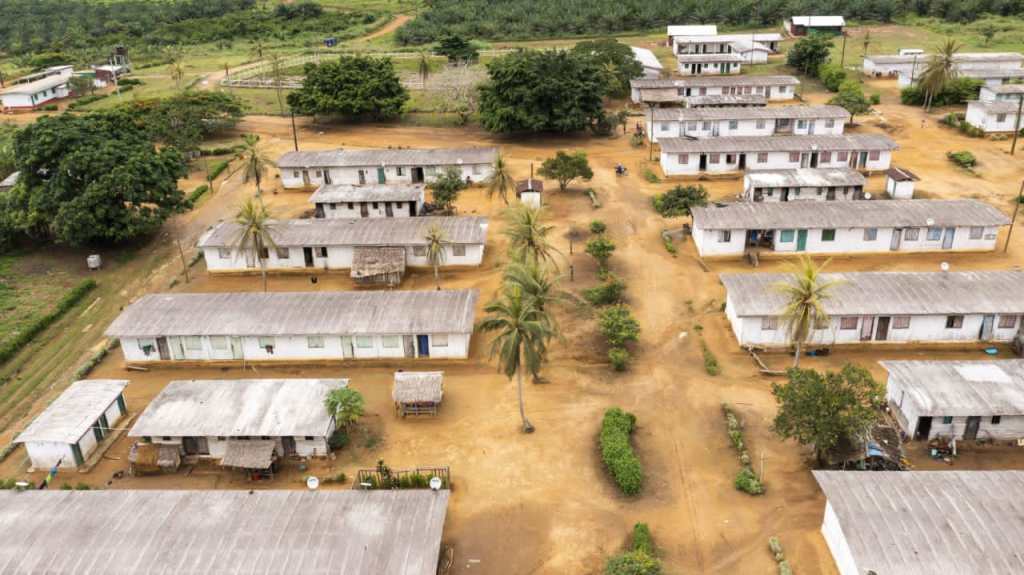
The statement outlines several sustainability initiatives targeting local communities and biodiversity in Cameroon: Operations near the Bagyeli Pygmy community in the Kienké region strictly adhere to Free, Prior, and Informed Consent (FPIC) protocols before undertaking new developments. Socapalm is continuing a multi-decade buffer zone initiative around local villages and wetlands. Launched in 2022 and running through 2046, the project aims to safeguard regional water quality. Part of Socapalm’s ongoing annual €4 million allocation funds training, road maintenance, and fresh fruit bunch transport for independent local smallholders. Cameroonian units partner with local Family Agricultural Schools to train youth in agriculture, livestock management, crafts, and food processing.
Financially, Socfinaf projected net revenues of €642 million in 2025. The company achieved Level 1 traceability for all raw materials by the end of 2025 and remains fully aligned with the EU Regulation on Deforestation-free Products (EUDR).
Recognizing its strategic role in Cameroon’s economy, Socapalm reaffirmed its commitment to local employment, pledging to continue recruiting Cameroonian talent across both short- and long-term contracts.
 Visionary Reports
Leave a comment