Eight monitoring stations to generate real-time pollution data and support cleaner, healthier cities
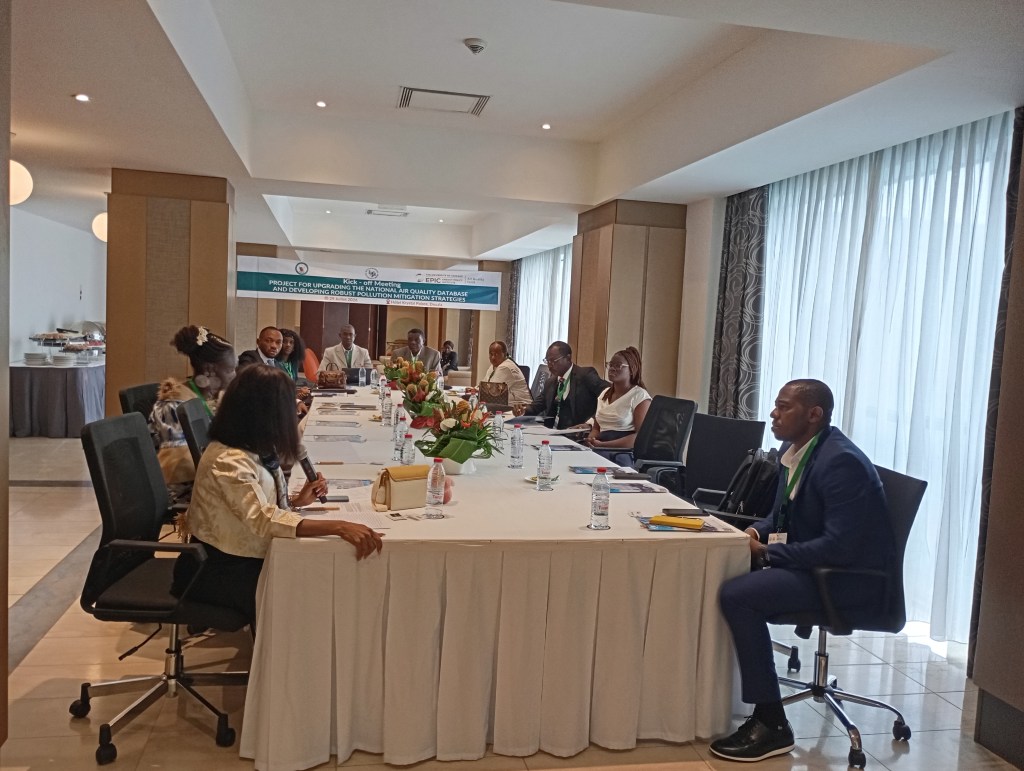
Cameroon has officially launched an ambitious air quality monitoring project. The project that was launched in Douala today July 29 is aimed at tackling one of the country’s growing environmental and public health concerns, air pollution. The 18-month initiative, funded by the Energy Policy Institute (EPIC) at the University of Chicago and implemented by the Center for Research in Nuclear Science and Technology (CRSTN) of the Institute of Geological and Mining Research (IRGM), seeks to strengthen the national air quality database while developing effective pollution reduction strategies.
The project will establish a continuous air quality monitoring network across the country’s two largest cities, Douala and Yaoundé. Eight Clarity N mini-monitoring stations, four in each city, will be deployed to measure concentrations of fine particulate matter (PM2.5), coarse particles (PM10), and nitrogen dioxide (NO₂) in real time. While the monitoring stations in Yaoundé have already been installed, the official launch in Douala marks the beginning of operations in the country’s economic capital.
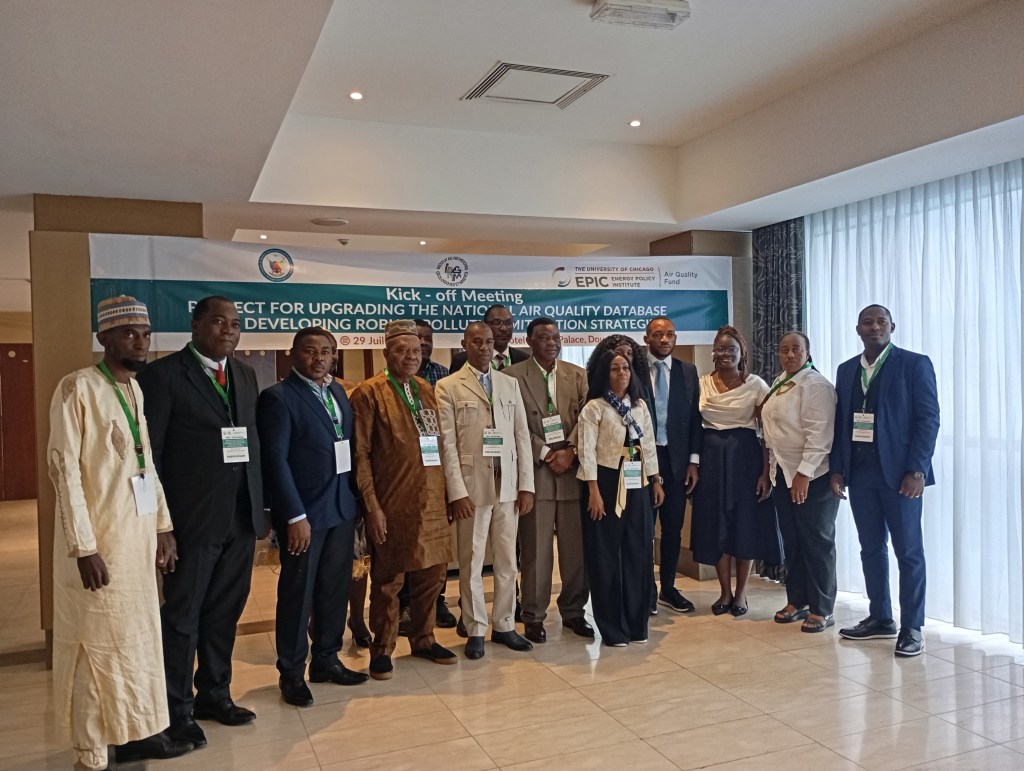
Speaking during the launch ceremony, Dr. Boniface Kanteu, Director of Scientific, Technical and Innovation Research at the l’IRGM representing the Director General Dr. Hell Joseph Victor, described air pollution as one of the greatest environmental and health challenges of the 21st century. He noted that rapid urbanization, increasing vehicle emissions, industrial activities, waste burning, and dust continue to expose residents of Douala and Yaoundé to harmful pollutants that contribute to respiratory illnesses, cardiovascular diseases, lung cancer, and other serious health conditions. Dr.
Kanteu expressed gratitude to the Government of the United States and the EPIC Air Quality Fund for selecting IRGM to implement the project, describing the partnership as international recognition of Cameroon’s scientific capacity. He stressed that the initiative would provide reliable scientific data to guide environmental policies, identify pollution hotspots, and support evidence-based decision-making.
“The project is much more than installing monitoring stations,” he said. “It is about building a future where public decisions are guided by science and where every citizen has the opportunity to breathe cleaner air.”
Beyond collecting data, the project also aims to educate communities on the dangers of air pollution and encourage environmentally responsible practices through awareness campaigns conducted in collaboration with local councils. The information generated by the monitoring stations will be made freely accessible to researchers, policymakers, development partners, and the general public through an open platform.
Implementation will be carried out in three phases. The first six months will focus on equipment deployment, stakeholder engagement, and the commencement of data collection. The second phase will continue data collection, while the final phase will analyze the findings, produce recommendations, and present results to decision-makers to strengthen national air quality management.
Experts from IRGM and EPIC will monitor the quality and consistency of data transmitted daily, while regular field inspections will ensure that the monitoring stations remain operational. Municipal councils will also play a role in safeguarding the equipment against vandalism, theft, and adverse weather conditions.
At the end of the first phase, the project is expected to have established a reliable baseline database on air pollution in Cameroon, laying the foundation for stronger environmental policies and healthier urban communities.
With air pollution responsible for more than one million premature deaths annually across Africa, officials believe the project represents a significant milestone in Cameroon’s efforts to protect public health, strengthen scientific research, and build more sustainable cities for future generations.
 Visionary Reports
Leave a comment