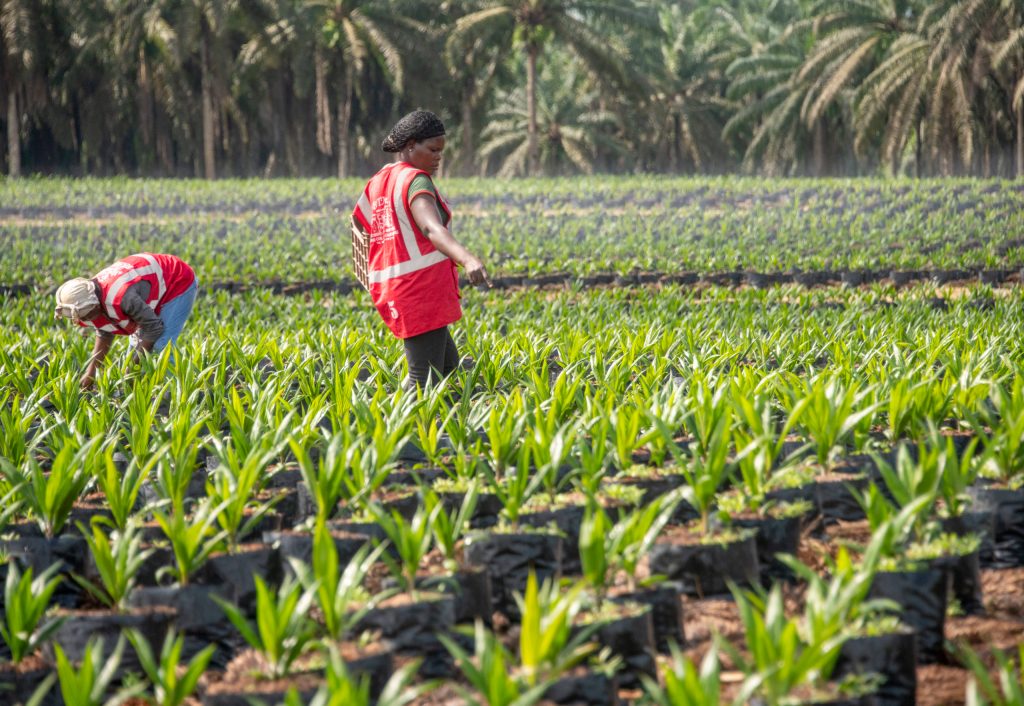
SOCAPALM, one of the leading palm oil producers and a major subsidiary of the Socfin Group, has released its 2025 Sustainability Report, outlining the company’s strategy to mitigate climate change, reduce carbon emissions and accelerate the transition to clean energy across its agricultural and industrial operations in Cameroon.The strategy is built on a two-pronged approach: maximizing the use of renewable biomass energy to offset immediate operational emissions while establishing a Group-wide decarbonization framework aligned with international climate standards.Following a recent Double Materiality Assessment (DMA)—a rigorous process that simultaneously evaluates environmental impacts alongside financial and operational risks SOCAPALM identified climate change mitigation and responsible energy management as two of its highest strategic priorities.To address these challenges, the company has structured its climate strategy around four key areas of action:

Comprehensive Greenhouse Gas (GHG) Accounting:
SOCAPALM is implementing a comprehensive monitoring system covering direct operational emissions (Scope 1), emissions associated with purchased energy (Scope 2), and indirect emissions generated throughout its value chain (Scope 3).
Transition to Biomass Energy
The company is increasing the use of agricultural residues and palm oil processing by-products to generate renewable bioenergy for its mills, significantly reducing dependence on imported fossil fuels. Reducing Fossil Fuel Consumption operational efficiency improvements are being introduced across heavy machinery, transport fleets, industrial boilers and diesel generators operating in remote plantation areas to lower fuel consumption and associated emissions.
Deployment of Solar Energy SOCAPALM is
progressively installing stand-alone solar energy systems to supply electricity to rural plantation facilities as well as administrative buildings.The report also explains how the company identifies its main climate-related risks and environmental impacts while developing practical mitigation and adaptation measures.
Biomass Valorization (Positive Impact)
The processing of fresh fruit bunches generates substantial quantities of organic residues that can be converted into renewable bioenergy, allowing palm oil mills to achieve near energy self-sufficiency.
Methane Emissions from Palm Oil Mill Effluent (Negative Impact)
Palm Oil Mill Effluent (POME) releases significant amounts of methane during decomposition. To address this issue, Socapalm is implementing methane capture systems designed to recover these emissions before they are released into the atmosphere.Extreme Weather Events (Physical Risk)Intense storms and irregular flooding increasingly threaten young plantations and disrupt harvesting operations. In response, the company is strengthening drainage systems, improving crop protection infrastructure and adapting the design and location of its operational facilities.
Plant Health Risks (Transition Risk)
Changing temperatures and rainfall patterns are increasing heat stress on plantations while encouraging the spread of pests and crop diseases. SOCAPALM is therefore investing in research and development to introduce planting material with greater resistance to drought and disease.To transform these commitments into measurable outcomes, the Socfin Group established a dedicated Carbon Taskforce in 2024. The multidisciplinary team brings together specialists in agronomy, industrial engineering, finance and sustainability.Its roadmap is structured around several key milestones:2024:
Regulatory Framework
Assessment review of international regulatory requirements and evaluation of corporate greenhouse gas accounting standards.2025: Transition to Corporate Carbon Accounting shift from product-based emission monitoring to consolidated Group-wide carbon accounting using specialized tools, including Palm GHG.2026: Baseline Carbon Footprint and Transition Plan completion of the Group’s consolidated carbon inventory to establish science-based emission reduction targets, followed by the presentation of a comprehensive Transition Plan to the Executive Committee.
2026–2027: Climate Scenario-Based Resilience Assessment
Comprehensive evaluations of climate risks and the resilience of the Group’s assets under multiple climate scenarios to assess their long-term sustainability.Despite the growing unpredictability of climate conditions across Central Africa, SOCAPALM believes its operations possess strong structural resilience. The geographical distribution of its plantations throughout Cameroon helps reduce the impact of localized extreme weather events on overall production.In addition, the company’s continuous replanting programmes facilitate the gradual introduction of new generations of planting material that are better adapted to rising temperatures and changing rainfall patterns. “Our strategy combines immediate actions, such as generating renewable energy from biomass, with long-term systemic planning,” the Group states in its report, reaffirming its commitment to aligning its operations in Cameroon with global climate objectives.
 Visionary Reports
Leave a comment