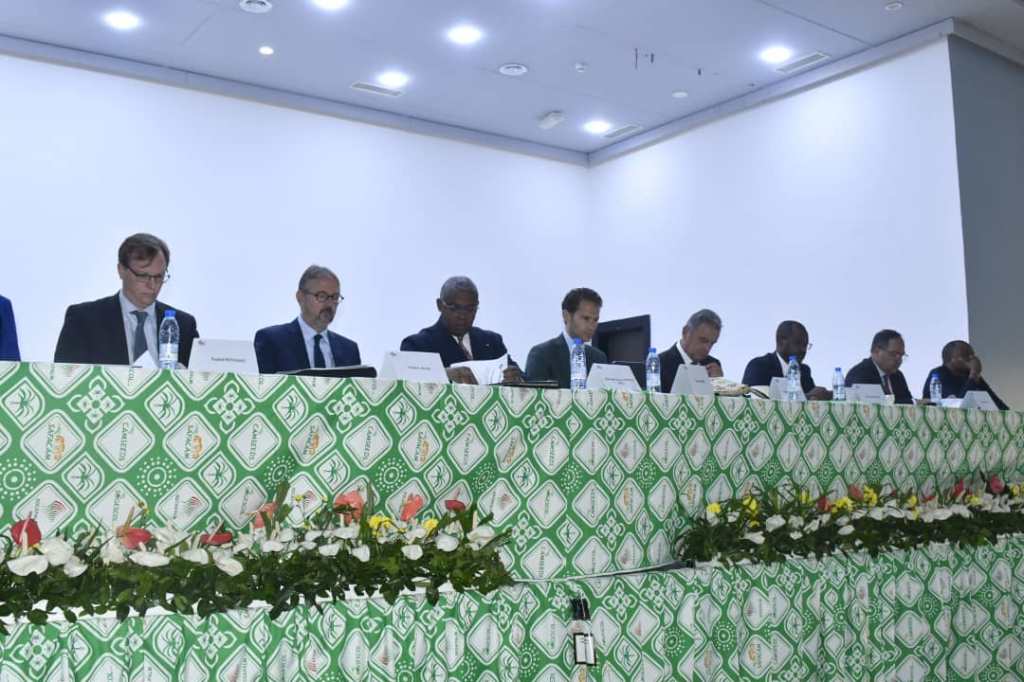
Board members, shareholders and institutional partners of agro-industrial group Socapalm, the Société Camerounaise de Palmeraies, gathered at a hotel in Douala on Friday, May 29, 2026, for the company’s Ordinary General Meeting.
The meeting reviewed Socapalm’s financial and operational performance for the 2025 fiscal year and outlined the company’s strategic priorities for 2026. The three-hour session focused on global economic pressures, local production challenges, market volatility and structural changes within the company’s plantation portfolio.
Socapalm’s Director General, Frédéric Augé, presented a detailed report on the company’s activities, noting that the 2025 financial year had been marked by a complex macroeconomic environment.
According to Augé, the start of 2026 remains shaped by shifting regional economic policies, evolving electoral contexts and increased regulatory pressure on businesses. Fiscal and GDP-related reforms across the region continue to affect operating costs, while also seeking to stabilize the broader public investment climate.
On the international market, commodity prices remained volatile throughout 2025. The annual average price on the Singapore Exchange rose slightly to $1,761 per tonne in 2025, compared with $1,743 in 2024, representing a modest increase of 1.6%. Prices fluctuated between $1,250 and $1,850 per tonne, driven by geopolitical tensions, climate events and disruptions in energy markets, before stabilizing at around $1,799 per tonne in December 2025.
In Cameroon, the palm oil market also faced strong competitive pressure and structural constraints. The return of freight and oil supplies into informal distribution channels, combined with new regulations and expanded refining capacity, contributed to a sharp decline in local market prices during the final quarter of 2025.
Palm oil imports into Cameroon rose significantly in 2025, reaching 135,738 tonnes to cover the domestic supply deficit. The figure, management noted, underscores the need to strengthen local production capacity.
Despite these market pressures and a slight reduction in dividend distribution compared with previous cycles, Socapalm maintained a solid financial position. The company posted a net profit of CFAF 10.6 billion for the 2025 fiscal year, slightly higher than the previous year.
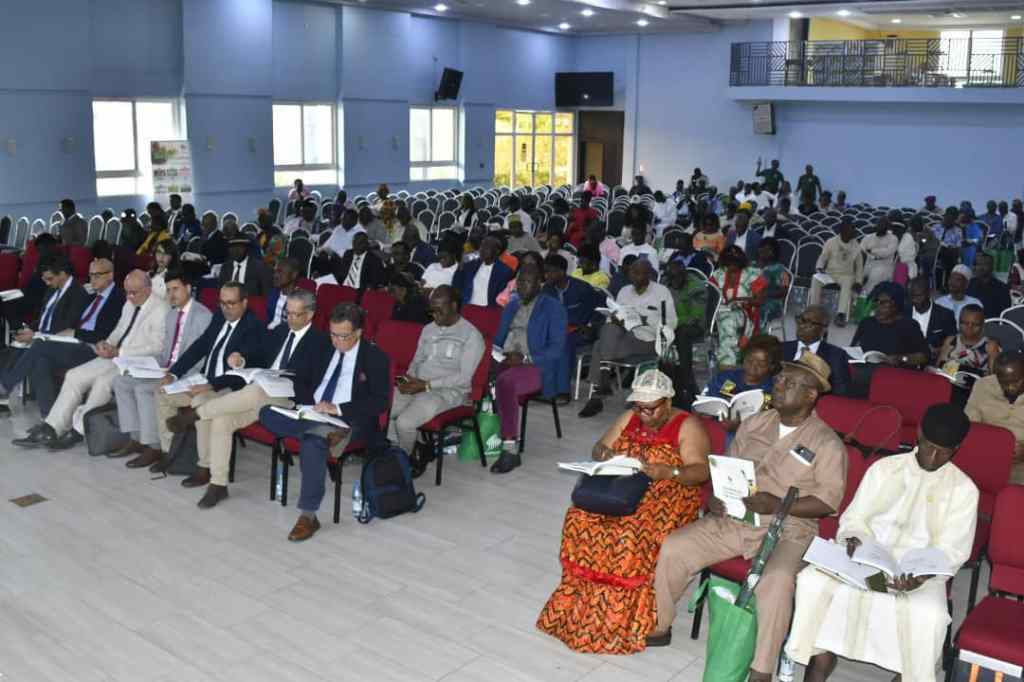
A representative of the independent audit firm confirmed the regularity and reliability of the company’s financial statements. As of December 31, 2025, Socapalm’s biological assets, mainly its palm plantations, were valued at CFAF 29 billion out of a total balance sheet of CFAF 91.5 billion. Physical audits and control tests confirmed the strong condition and long-term viability of the crop inventory.
In accordance with Article 438 of the OHADA Uniform Act, three new regulated agreements were reviewed. These covered administrative management services, international support and technical know-how licences with partner entities, representing more than CFAF 900 million in charges.
The auditors also certified that the company’s total recovery and reserve rate stood at CFAF 9.71 billion, in compliance with applicable accounting standards and legal provisions under the OHADA framework.
Socapalm also reaffirmed its commitment to social and environmental performance as part of its broader engagement with local communities and international stakeholders. The renewal process for ISO 14001 environmental management certification across production sites is under way.
The company reported progress in corporate social responsibility, including the extension of long-term contracts for temporary workers, improvements in occupational health and safety standards, and the introduction of mental health and stress-management initiatives for employees. Socapalm has also funded ecological restoration programmes in degraded areas to support biodiversity and ecosystem recovery.
The assembly also gave rise to debate over Socapalm’s long-term asset management strategy.
Meanwhile,Jean Marie Biada, an economist and Socapalm shareholder since 2009, voiced concern over the reduction of the company’s plantation footprint.
“When I became a shareholder, Socapalm managed six major plantations: Kienké, Mbambou, Mbongo, Edéa, Eséka and Dibombari,” Biada said. “Today, Edéa and Eséka are no longer in the portfolio, leaving us with fewer production sites. If our ambition is to reduce the national supply deficit and push production beyond 200,000 tonnes, we must expand cultivated areas, not reduce them. Socapalm should not be satisfied with 48% of the market. We should aim for 60% or 70%.”
Biada also criticized the state for not exercising its right of first refusal to preserve strategic assets within the company’s original structure. He compared the divestment to privatization policies of the late 1980s, which he said had weakened long-term agricultural
output.
Responding to these concerns, Abdoulaye Hayatou, the state representative at the General Meeting, defended the board’s decisions and praised management for its performance in a highly competitive and climate-constrained year.
He addressed the controversial transfer of the Eséka mill and plantation assets, saying the transaction had been concluded in the best interests of Socapalm and its shareholders.
“The sale and transfer of the Eséka asset at the end of 2025 was carried out in the full interest of Socapalm and its shareholders,” Hayatou said. “It enables Socapalm to consolidate its capital, optimize yields and intensify investment across its remaining industrial units. At the same time, it allows another specialized and ambitious operator to invest significantly in the Eséka area.”
Furthermore, he added that Socapalm remains the market leader but cannot, on its own, absorb Cameroon’s annual palm oil deficit, estimated at between 135,000 and 150,000 tonnes.
“Opening space for other local investors is fully aligned with the state’s import-substitution strategy: producing enough locally so that Cameroon becomes less dependent on costly imports,” he said.
With its 2025 results approved and a strategic roadmap endorsed by shareholders, Socapalm enters 2026 with renewed momentum. Management and stakeholders expressed confidence that the company’s structural adjustments, financial discipline and operational strategy will support a more productive, competitive and sustainable year ahead.
 Visionary Reports
Leave a comment