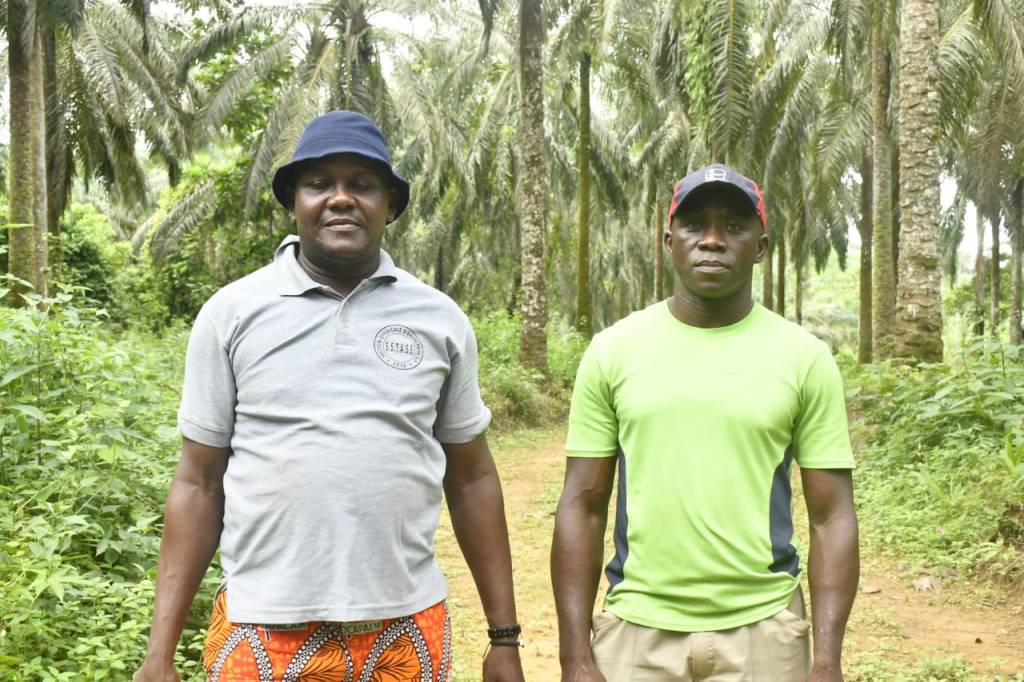
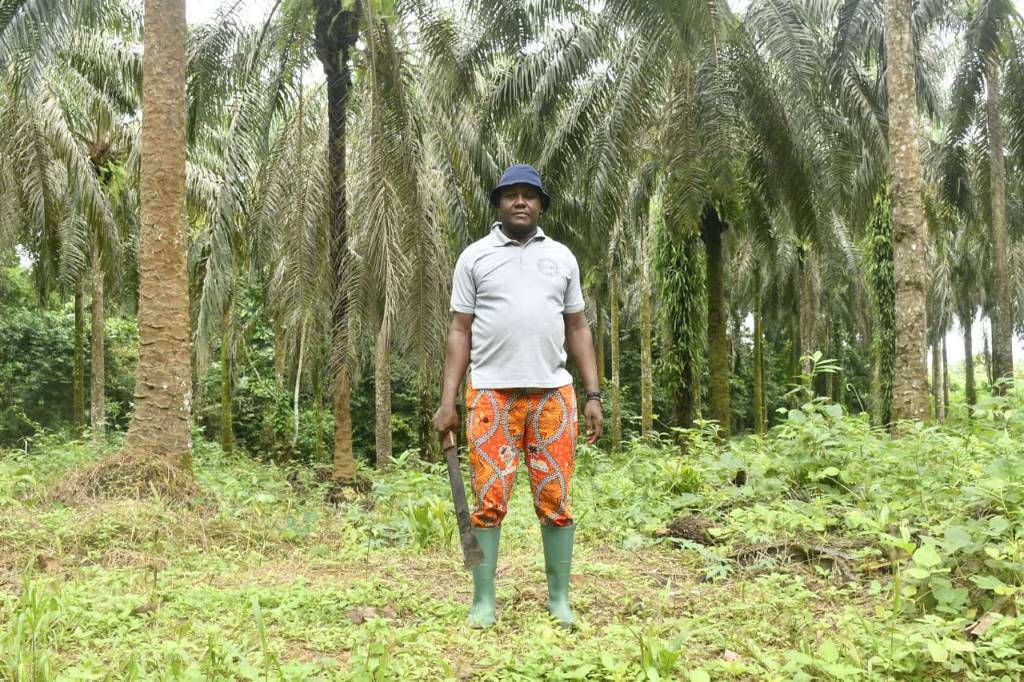
Local palm nut farmers in Koukoue, a village in the Edéa I subdivision of the Sanaga-Maritime Division (Littoral Region), have highly praised their long-standing, mutually beneficial partnership with Socapalm (Société Camerounaise de Palmeraies). The strategic collaboration guides smallholders through cultivation, harvesting, and logistics, advancing a shared mission to boost domestic palm oil production, improve rural livelihoods, and curb the nation’s reliance on imported oil.In addition, Mbahe Kaane Benjamin, a dedicated palm nut farmer and the 3rd Class Chief of Koukoue village, shared insights into the daily realities of managing his plantation under the guidance of Socapalm.Chief Benjamin maintains a grueling routine, rising at 3:00 AM daily to balance his community leadership duties with field maintenance. He focuses on meticulous weed management and crop care to optimize his yield.”Socapalm provides vital structural and technical support. Every year, we submit our requests, and they deliver the necessary agricultural materials,” Chief Benjamin explained. “For instance, on this plot of 3.5 hectares, they have provided essential infrastructure. I own another 5-hectare plot where Socapalm cleared and maintained the access roads. This is a massive tangible benefit for village planters.”Despite a stable gross annual turnover of 2.5 million CFA francs, Benjamin noted that smallholders face tight margins due to rising fiscal pressures.”We face significant tax challenges. The tax rate has climbed from 5% to 10%, which heavily impacts our net income. When you deduct taxes and the wages for cutters and farmworkers, the profit margins are slim. Our living conditions are sustainable, but they could be better. We are constantly pushing forward.”He also emphasized the urgent need for crop renewal. Pointing to a section of his plantation established in 1978, he remarked:”These palms are over 45 years old. We are currently working on plans to regenerate these aging plots to restore peak productivity.”To address these challenges, Socapalm deploys specialized field teams to guide independent smallholders.Keki Nshiomog Eric, a Technical Assistant at Socapalm, detailed his role in bridging the gap between corporate agro-industrial standards and rural smallholders.”Village plantations are entirely owned by private individuals who fund their crops independently,” Eric explained. “Our partnership is built on a shared interest: Socapalm is both a major palm oil producer and a primary buyer of agricultural produce. This creates a multi-phased partnership covering technical assistance, crop transportation, field expertise, seedling acquisition, and road maintenance.”Eric added that his core mission is to empower farmers with the knowledge required to optimize yields and secure higher returns:Agronomic Guidance:Routine field inspections occur at least once a month.Logistical Solutions: Coordination of harvesting timelines and direct transportation of fresh fruit bunches (FFBs) to the processing mills.Administrative Aid: Assisting rural farmers with procedural paperwork, material requests, and corporate compliance.
However, Jean-Pierre Batta, representing Socapalm’s management, underscored the historical evolution and broader socio-economic goals of the initiative. Originally launched in 1977, the smallholder outreach program underwent a major restructuring following Socapalm’s privatization in June 2000.”Privatization allowed us to transform these relationships into true, well-structured business partnerships,” Batta stated. “Our objective is to improve smallholder yields through Best Agricultural Practices (BAPs) while upgrading vital rural infrastructure.”Batta highlighted several key pillars of the modernized partnership:The construction and maintenance of roads and bridges do not just benefit palm oil transport; they open up isolated rural basins, improving mobility and market access for all village inhabitants.Socapalm guarantees predictable cash flows by ensuring regular payments are disbursed within 3 to 4 days of the monthly closing period. Additionally, the program helps farmers align with formal legal, environmental, and tax regulations.For Socapalm, the project secures a steady supply of high-quality raw materials to maximize factory capacity. “The government of Cameroon is actively engaged in a strategic fight to boost local palm oil production and reduce costly imports,” Batta noted. “Socapalm is a frontline player in this economic defense, and our network of private smallholders is a critical engine driving this national vision forward.”For sure,the success of the partnership model extends far beyond the borders of Koukoue. Socapalm has replicated this strategic smallholder framework across its various operational hubs in Cameroon, including Mbongo, Mbambou, Dibombari, and Kienké. By empowering local farmers, the company continues to foster a sustainable, self-reliant agro-industrial ecosystem nationwide.
 Visionary Reports
Leave a comment