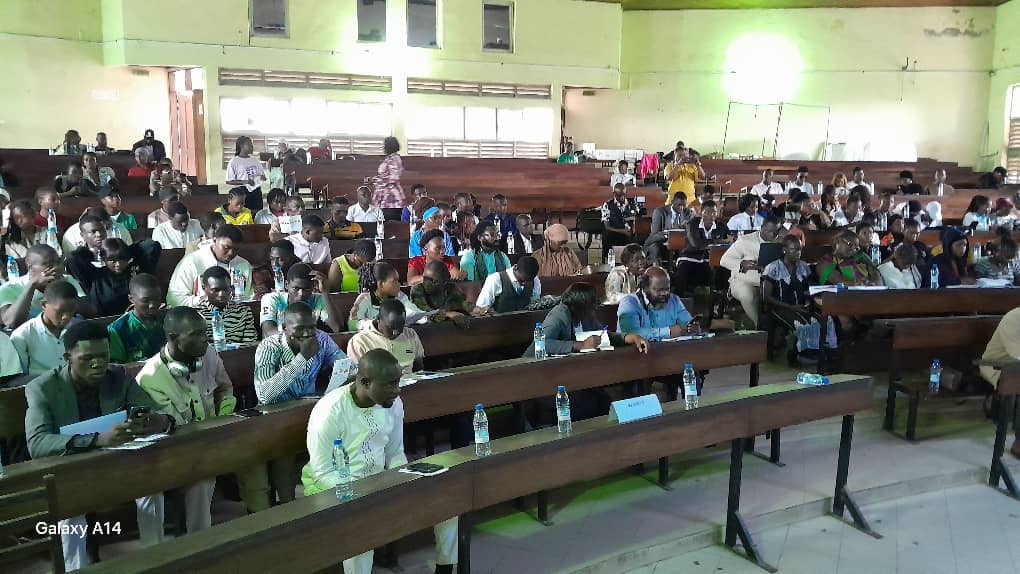
The University of Douala on Monday, May 18, 2026, hosted a high-level roundtable conference for students and professionals in the communication department. Held under the theme “The Extractive Industries Transparency Initiative (EITI) through the Prism of CSR (Corporate Social Responsibility),” the three-hour deliberation brought together seasoned communication experts and was chaired by Dr. Ngome Blasius.In his keynote presentation,Prof. Thomas Atenga enlightened participants on why the government of Cameroon must jealously safeguard its extractive industry.Professor Atenga traced the critical framework of “extractivism,” noting it was popularized by researchers in South America to analyze the systematic exploitation of natural resources by Global North corporations. Today, however, the concept is vital for local populations to understand resistance, community impact, and post-extractivist alternatives.”When we talk about capitalism and resource management, we are talking about a process of value production that drives market extraction,” Atenga explained. “Today, this often manifests as resource predation, which severely disrupts the livelihoods of local populations affected by these activities.”He challenged the audience to look inward, noting that extractivism is no longer just driven by Western companies, but also by local actors participating in these processes. He urged future communicators to analyze how resource extraction alters the socio-economic organization of territories, communication ecosystems, and local cultures.In addition, Prof. Atenga highlighted that companies in the extractive sector often operate in a complex political and liberal space, sometimes deploying communication strategies to obscure harmful practices or deflect public discredit.To counter this, he outlined three pillars of communication required to tackle the extractivism crisis: Re-evaluating how companies engage ethically with the public. Ensuring robust, objective journalistic coverage. Ensuring local communities are actively participating in decisions, rather than being sidelined. “The first challenge is awareness and information. The second is community participation,” Atenga emphasized, pointing to the ongoing resource-driven conflicts in the eastern Democratic Republic of Congo as a warning sign. “If local communities who bear the brunt of environmental damage—are not educated and included, resource extraction becomes a recipe for national destabilization. The media has a fundamental duty to inform, educate, and raise awareness.”Taking the floor,Dr. Blasius Ngome shed light on the mechanics of the extractive sector and its macroeconomic importance to Cameroon. He reminded the audience that Cameroon’s adherence to the EITI framework represents a top-down state commitment to fighting corruption and ensuring resource transparency.
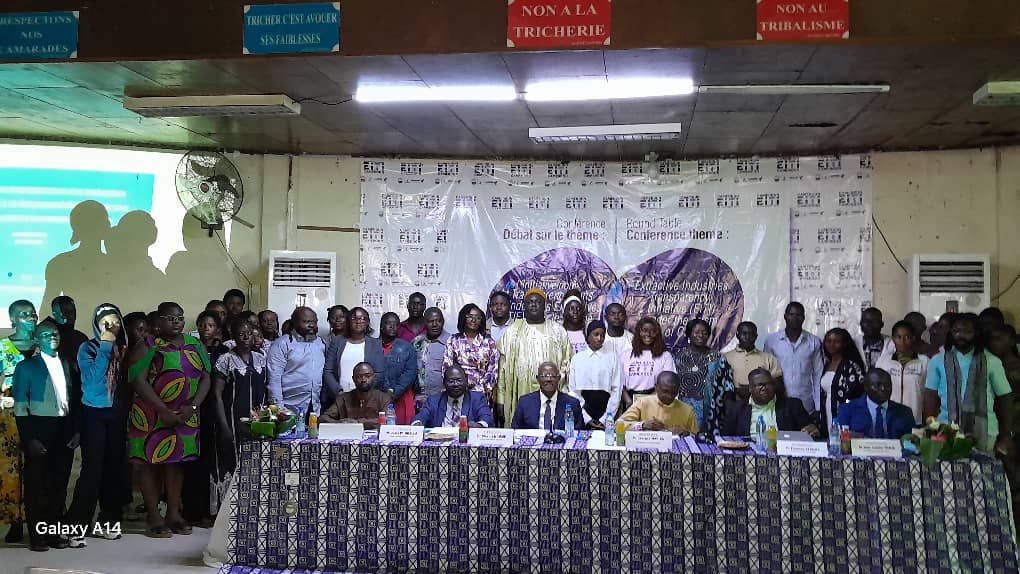
Responding to questions about how citizens directly benefit from oil, gas, and mining revenues, Dr. Ngome clarified the mechanisms of state wealth redistribution. “It is logistically impossible to distribute cash from the extractive sector to every Cameroonian individually,” Dr. Ngome stated. “Instead, the state injects these revenues directly into the national community through the annual state budget. This is how citizens benefit through the construction of public infrastructure like roads, schools, and hospitals.”Nevertheless, Dr. Ngome emphasized that the conference’s ultimate goal was to demystify the extractive sector and Corporate Social Responsibility for the university community. He challenged the undergraduate and postgraduate students to take ownership of these contemporary issues through rigorous academic research.”We would be deeply fulfilled if students took it upon themselves to conduct Master’s and PhD research on the EITI framework,” Dr. Ngome remarked. “In fact, we have already registered our first student who is willing to carry out their thesis research on the EITI. This is a massive win, as their scholarly work will help educate the wider Cameroonian public on how this vital sector operates and how they can benefit from it.”The roundtable conference concluded with high engagement, drawing a massive crowd of both student communicators and practicing media professionals eager to bridge the gap between communication theory and natural resource governance.
 Visionary Reports
Leave a comment