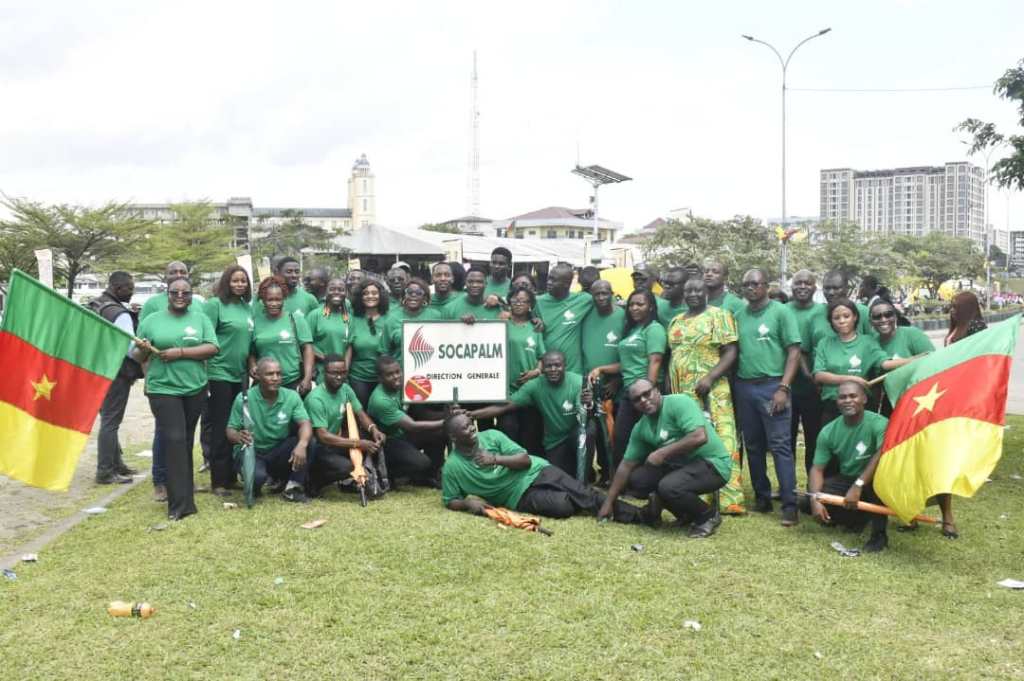
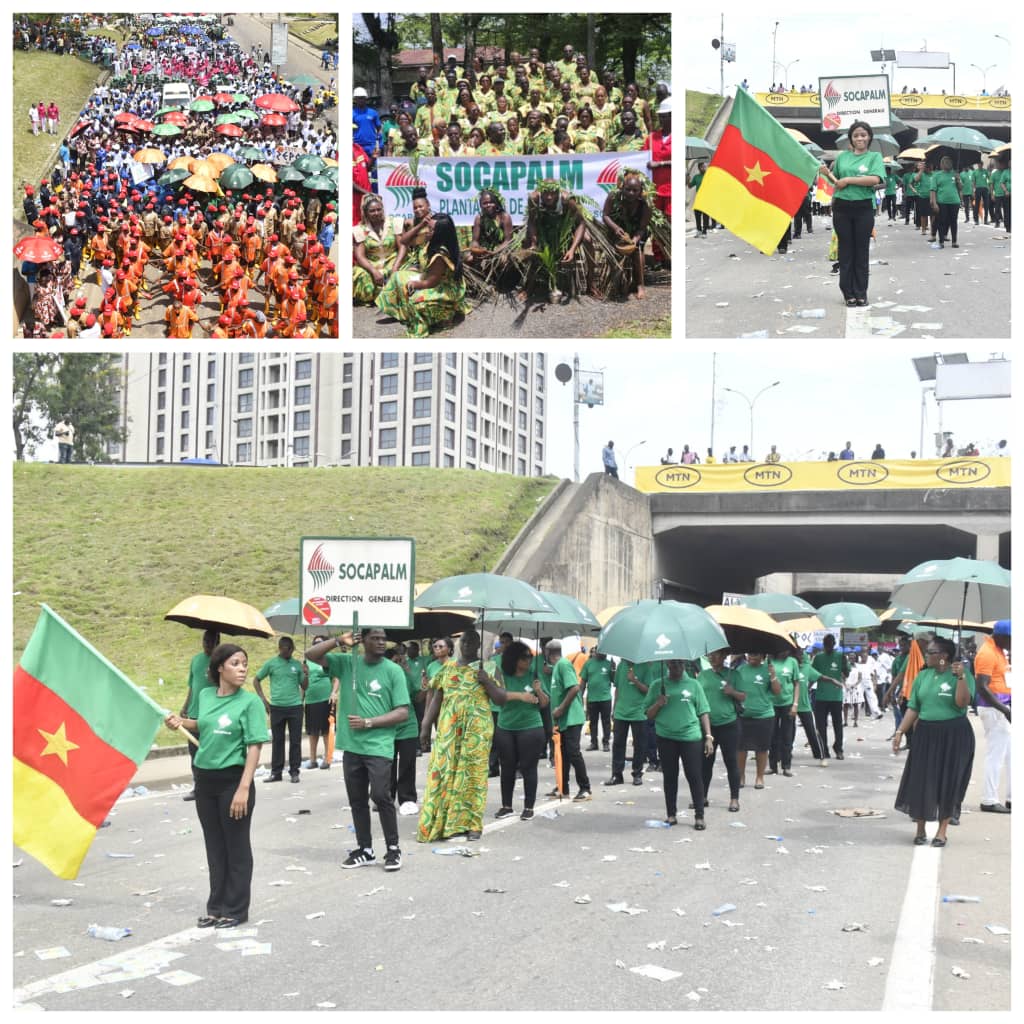
SOCAPALM, the cornerstone of Cameroon’s agro-industrial sector, joined the global community on Friday, 1 May 2026, to commemorate the 140th International Labour Day. Far from a mere formal observation, the event served as a vibrant showcase of corporate synergy and a platform for profound professional reflection.From the lush plantations of Mbambou, Dibombari, Edéa, Kienké, and Mbongo to the executive corridors of the Bonanjo headquarters, the workforce mobilised in impressive numbers. Dressed in ceremonial attire that mirrored the prestige of the occasion, employees converged on the Beseke Ceremonial Ground in Douala for the traditional march-past. The parade was reviewed by the Governor of the Littoral Region, Samuel Dieudonné Ivaha Diboua, who was joined by an esteemed delegation of administrative, political, and traditional dignitaries.The festivities transitioned from the parade square to a formal reception, where the atmosphere shifted from pageantry to purposeful dialogue. Centred on the theme, ” Social Dialogue and Decent Work: Factors for Peace, National Cohesion, and Economic Development, ” the ceremony allowed staff representatives to voice both the triumphs and the aspirations of the workforce
.Representatives expressed sincere appreciation for the management’s recent strategic interventions. They highlighted the successful, gradual reorganisation of departments which has streamlined operations, alongside the harmonisation of professional practices designed to eliminate internal disparities. These modernised working methods, they noted, have significantly sharpened the company’s competitive edge in an increasingly demanding market.However, the discourse remained grounded in transparency. Staff spokespersons addressed ongoing hurdles with professional candour, citing occasional interdepartmental frictions and a lingering resistance to structural shifts. They advocated for a more inclusive approach to decision-making, asserting that social dialogue must transcend being a mere administrative formality to become a genuine engine for stability and collective performance.In a comprehensive and empathetic response, the Director General of Socapalm, Frederic Auge, reaffirmed his commitment to an “open-door” philosophy. Mr Auge reminded the assembly that the company’s primary asset is not its extensive industrial machinery, but its people. He articulated a vision where social justice and economic stability are not competing interests but mutual goals.The Director General emphasised that while structural reorganisation is vital for the company’s survival, it must be delivered through “managerial proximity” and education rather than top-down mandates. He appealed to the workforce for continued discipline, punctuality, and loyalty—values essential to safeguarding an institution that sustains thousands of families across the nation.”No transformation project can succeed against the will of the workers,” Mr Auge declared. “We must understand that social peace is not the absence of disagreement, but the ability to manage those disagreements without destroying our shared home.”The human element of the day was further enriched by personal accounts from the staff. Fonkwah Dayane, celebrating her inaugural Labour Day with the firm, spoke warmly of the profound sense of belonging fostered by the current leadership. Similarly, Ngo Nyemb commended the robust solidarity within the ranks, urging the executive team to maintain this momentum of mutual respect.The event reached its climax with a notable gesture of humility: the Director General personally visited every table during the reception, sharing moments of conviviality with staff at all levels. This act of engagement reinforced the bond between the leadership and the shop floor, ending the 140th Labour Day on a note of renewed optimism. As the celebrations concluded, Socapalm stood as a compelling testament to the belief that transparent social dialogue remains the bedrock of sustainable economic development.
 Visionary Reports
Leave a comment