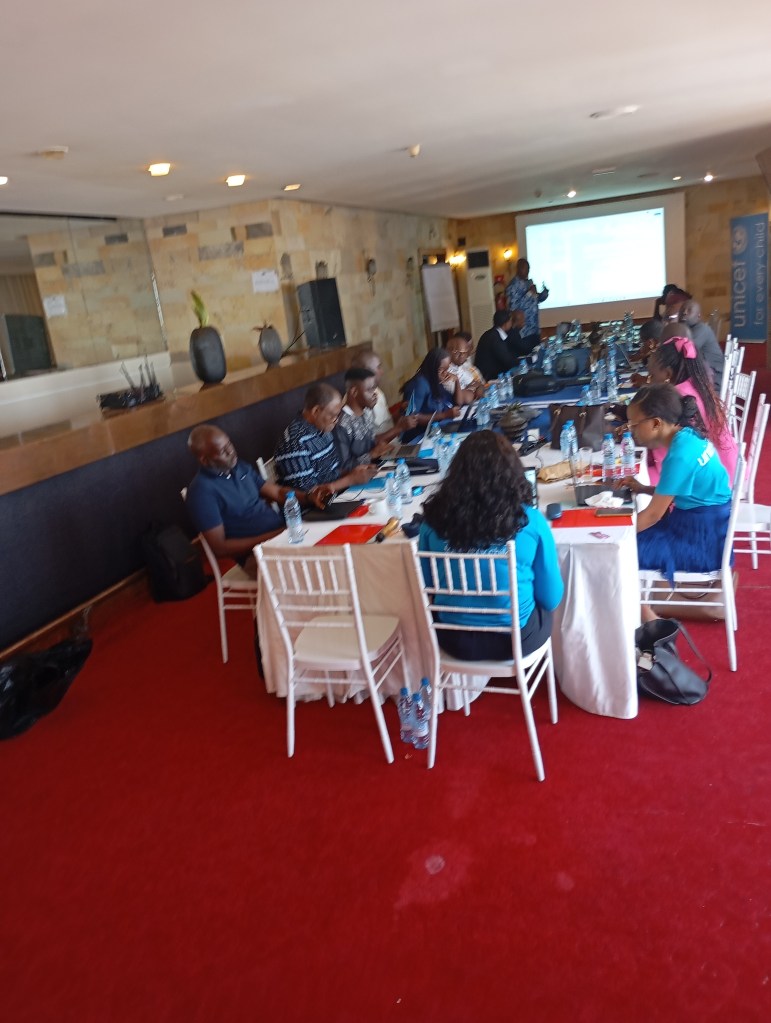
The Ministry of Water and Energy is collaborating with UNICEF to better understand the water sector’s financial flows specifically how much funding is injected into the sector, by whom, who benefits, and other key parameters needed to assess the sector’s financial status. Against this backdrop, stakeholders in Cameroon’s Water, Sanitation and Hygiene (WASH) sector met in Douala from 20–22 April 2026 for a technical workshop focused on strengthening the national capacity to process, code and analyse WASH financial data an essential step toward producing reliable and decision-ready WASH Accounts for the years 2022, 2023 and 2024.The workshop is part of efforts to ensure comprehensive, structured and harmonized tracking of actual sector expenditures going beyond budget estimates. A key feature of the three-day meeting was hands-on work using WASH Accounts Production Tool( WAPT) standardized software designed to code expenditures according to international WASH accounts classifications and to generate analytical tables required for WASH Accounts reporting.According to Abdoulaye Fall UNICEF chief WASH Cameroon, the workshop aims to review the data collected so far to determine current levels of government financing, identify funding gaps, and develop strategies to address them. These strategies , he said,will focus on improving public funding as well as mobilizing additional resources from multilateral partners, donors, and commercial funding, with the overall goal of increasing access to water, sanitation, and hygiene (WASH) services across the country. He added that the workshop will enable participants to be able to organise , verify and clean collected datasets from multiple sources such as public administrations, development and technical partners, non-governmental organizations, and households. He explained that participants also worked on importing the cleaned data into WAPT for systematic coding of financial flows covering funding agents, types of financing, service providers, functions, service categories, and breakdowns such as region and setting (urban/rural).During the workshop Participants focused on generating the standard tables and key WASH Accounts indicators, reviewing and interpreting the patterns emerging from the coded results. At the end of the three days workshop, participants were able to produce the analytical inputs needed to support the drafting of the Cameroon WASH Accounts report. According to the Director of account and resources in the ministry of water resources and energy Madi Vondou, the technical process is not only a data-management exercise, but a practical step toward improving transparency and informing strategic decisions for WASH sector planning and resource allocation across Cameroon.
 Visionary Reports
Leave a comment