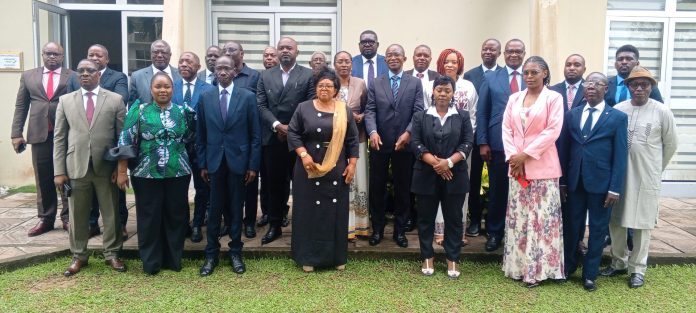
From April 20 to 25, 2026, Douala is serving as the strategic epicenter for the future of Central Africa’s extractive industries. The CEMAC Commission (Economic and Monetary Community of Central Africa) convened a high-level regional consultation to finalize the preliminary draft of the Community Mining Code, a legislative milestone designed to transform how the region manages its vast mineral wealth.The gathering is notable for its inclusivity, bringing together a powerhouse of regional stakeholders: Senators, Members of Parliament, and representatives from national Ministries of Mines. Experts from the Bank of Central African States (BEAC),the Central African Financial Market Supervisory Commission (COSUMAF), and the Central African Stock Exchange (BVMAC).The Sub-Regional Institute of Statistics and Applied Economics (ISSEA), private sector leaders, and civil society advocates.This diverse assembly underscores a shift toward a harmonized legal framework, moving away from fragmented national policies that international partners have historically exploited.However,the discussions were anchored by four strategic imperatives:Integrating continental standards to ensure CEMAC remains competitive and modern. Prioritizing transparency and accountability to eliminate corruption and mismanagement. Creating synergy between the six member states (Cameroon, CAR, Congo, Gabon, Equatorial Guinea, and Chad) to offer a predictable environment for investors. Reducing reliance on external consultants by leveraging local technical skills.Mr. Fulgence Likassi-Bokamba, Commissioner for Good Governance at the CEMAC Commission, chaired the proceedings. He emphasized that this document is a point of pride for the region, having been crafted entirely by Central African experts since 2023. “It is not a work where we called a consultant from elsewhere to offer it to us,” Likassi-Bokamba stated. “It is the experts from the six member countries who have worked to produce this document for technical validation.”Beyond the technicalities, the Commissioner highlighted the socio-environmental and economic necessity of the code. He noted that unregulated mining has historically led to “angry consequences” for health, the environment, and local populations. Crucially, the code serves as a tool for economic sovereignty.
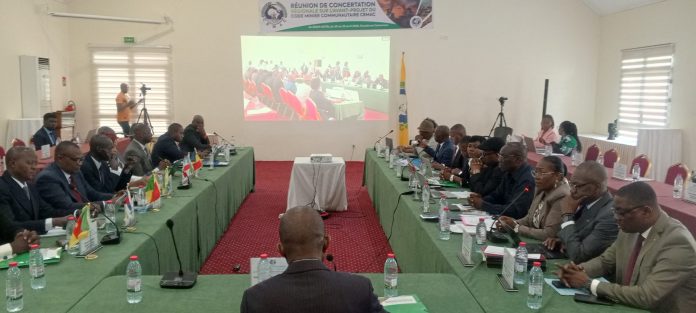
By acting as a unified bloc, CEMAC states aim to protect themselves from predatory negotiation tactics. “The code will protect our states from partners who generally prefer to see states divided to better take their part,” the Commissioner added.Nevertheless,the technical validation in Douala is the final hurdle before the draft moves to the political stage:Approval by the Ministers of Mines of the member states.Consultation with the Community Parliament.Final Adoption by the CEMAC Council of Ministers.The draft Community Mining Code is more than a legal text; it is a collective response to the historical challenges of the “resource curse.” By aligning public and private interests, CEMAC is laying the groundwork for a mineral revolution where wealth is not just extracted, but harnessed for the sustainable development of its nations and the well-being of its people. The road to implementation remains, but in Douala, the foundation for a more prosperous Central Africa was firmly laid.
 Visionary Reports
Leave a comment