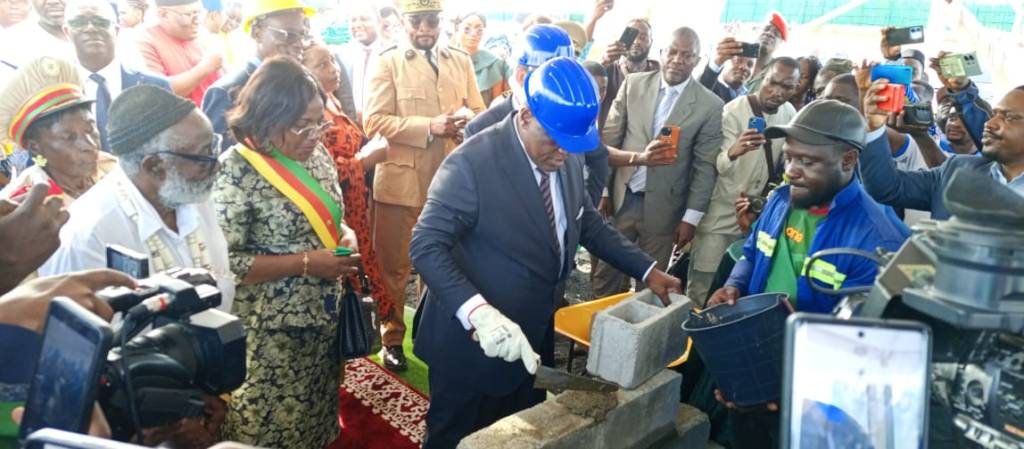
As part of government efforts to improve the availability of palm oil production in the country,a decisive move toward national food sovereignty, the Minister of Agriculture and Rural Development, Gabriel Mbaïrobe, has officially laid the foundation stone for the OPALM Industrial Oil Mill in Lengué, Mbanga. The colorful ceremony on April 8th,2026,was attended by the Governor of the Littoral Region, Samuel Dieudonné Ivaha Diboua, and the SDO of Moungo Division ,Yves Bertrand Noël Ndjana, marks the operational phase of a strategic partnership signed in December 2025 between the State of Cameroon and the multinational firm OPALM.Also,the Lengué facility is the first of five planned units across the country. This specific site represents a major industrial milestone for the Moungo production basin:9 Billion CFA Francs:Investment for the Lengué unit.25,000 Tons: Annual production capacity of crude palm oil.450 Direct Jobs: Employment opportunities for the local community.170 Kilometers: Length of rural roads to be created and maintained by OPALM.300+ Producers: Local farmers with guaranteed purchase contracts for their entire harvest.The Lengué plant is part of a broader 45 billion CFA franc investment program by OPALM.
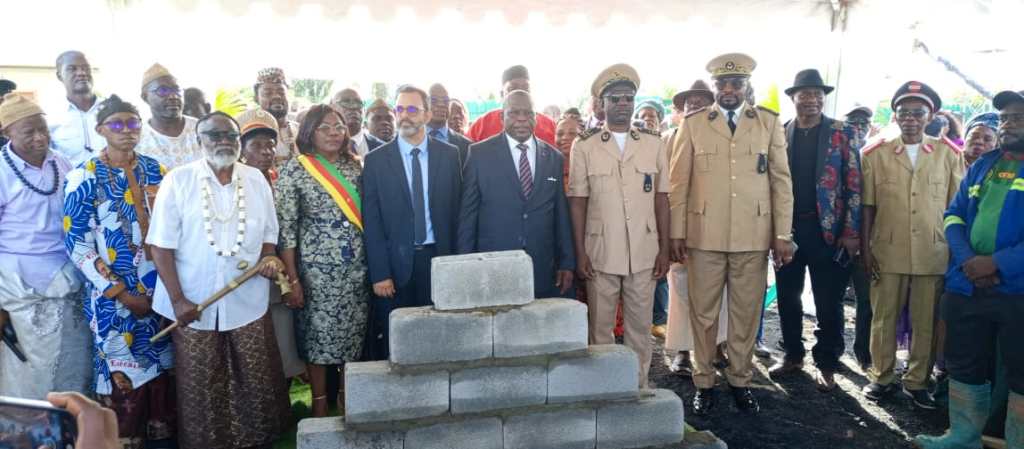
Through this initiative, the Cameroonian government aims to:Add 108,000 to 150,000 tons of crude palm oil to the national supply annually. Bridge the current deficit of 200,000 tons, saving the state over 100 billion CFA francs in imports.Establish a “territorial logic” where production, collection, and processing happen within the same ecosystem.Furthermore,the project is not merely industrial; it is designed to revitalize the rural economy. OPALM has committed to a synergy with local actors, including MINADER, IRAD, and various cooperatives, to focus on: Moving smallholders from the current 500kg per hectare toward a target of 2 tons per hectare. Providing a guaranteed outlet for fruit bunches, ensuring farmers no longer sell at “bargain prices” due to a lack of processing facilities. Opening up “production pockets” through extensive road maintenance in collaboration with SOCAPALM. Minister Gabriel Mbaïrobe emphasized the project’s alignment with President Paul Biya’s import-substitution policy:”Agriculture, and specifically palm oil, chronically unbalances our trade balance because we import nearly 300,000 tons to meet consumption needs. By installing these units next to the raw materials, we are not just building factories; we are increasing monetary circulation in rural areas and ensuring our people ‘consume what they produce’.”Thus,when fully realized,it will improve income, knowledge transfer, and guaranteed market access.Standardized quality, reduced costs, and traceable supply chains. 1,200 indirect jobs, reduced trade deficit, and enhanced food security.By positioning itself at the heart of the Moungo basin, OPALM is set to become the backbone of Cameroon’s initial palm oil processing, turning a chronic deficit into a sustainable local success story.
 Visionary Reports