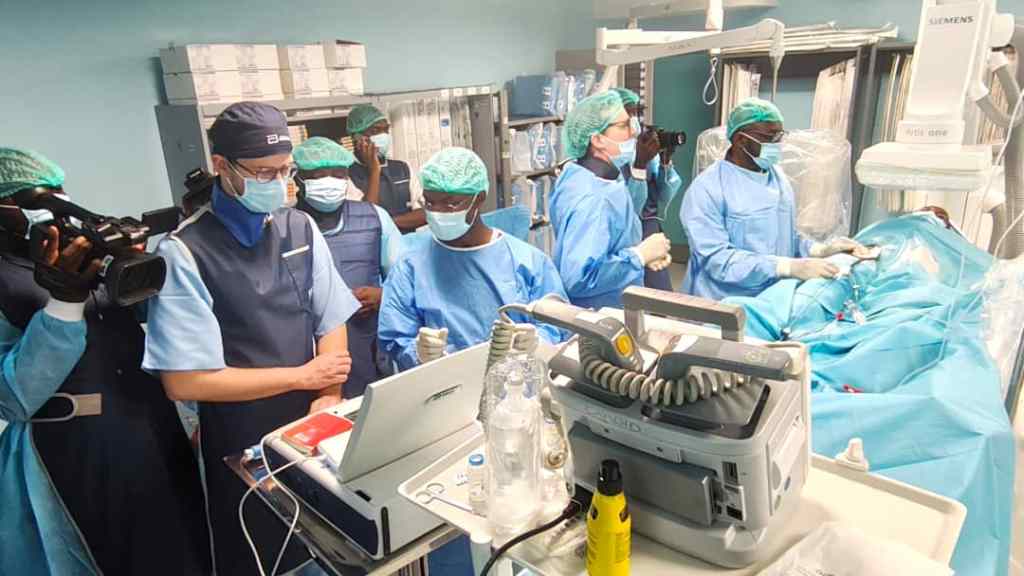
The Douala General Hospital is making significant strides in new cardiology technology. One of its latest innovations is the ability to perform leadless pacemaker implantations. This was achieved on Thursday, March 26, when specialists from the Cameroon Cardiology Society and a visiting experts met to install leadless pacemakers. The procedure is designed to improve outcomes for patients living with certain rhythm disorders.This came on the heals of the Cameroonian Society of cardiology congress that took place in Douala from the 26- 27 of March. The congress was placed under the theme “sudden death” . Cardiology teams emphasized that abnormal heart rhythms particularly conditions that cause the heart to beat too slowly can lead to fainting, loss of consciousness, and, in severe cases, sudden death. According to clinicians, early detection and timely intervention can prevent complications, and modern pacemaker technology plays a key role in this effort.Explaining the difference in plain terms, Nicolas Lesbros technical engineer at Abbott from France described how traditional pacemakers function through electrical impulses delivered to the heart via a lead (wire). In contrast, leadless pacemakers are implanted directly inside the heart as a small capsule, eliminating the need for a lead that runs through veins.Meanwhile Professor Anasthase Dzude cardiologist specialise in cardiac rhythm disorder at the Douala General Hospital explained that traditional systems can involve concerns such as infection and thrombosis (blood clot risks), while leadless devices reduce these risks by removing the lead component.He also pointed the longevity as another benefit: traditional pacemakers are typically expected to function for about 10 to 12 years, while leadless systems may last roughly 15 to 20 years, sometimes longer meaning fewer replacement procedures over a patient’s lifetime.Prof. Anasthase Dzude reiterated that patients often experience noticeable improvement soon after implantation. He said that people who arrived extremely fatigued due to slow heart rates may recover energy within hours once the device begins supporting normal heart rhythm.He noted that infection related complications are a major concern in lead-based systems and that leadless technology is intended to reduce the likelihood of these serious events.
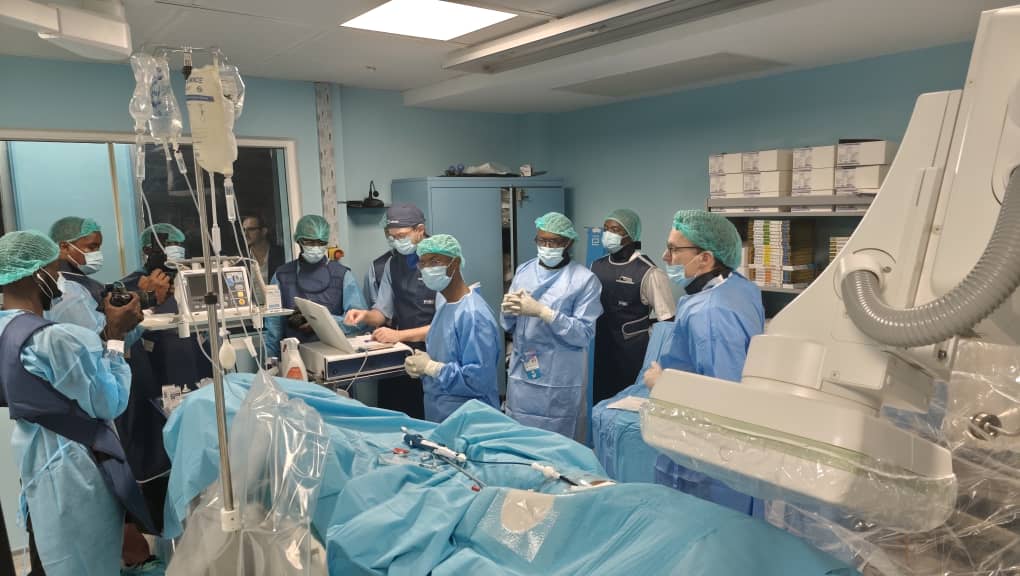
According to the medical Director at the Douala General Hospital Professor Mbatchou Ngahane Hugo said the mission is also about training younger physicians and sharing practical experience.He added that Doctors at the Douala General Hospital have been implanting pacemakers since 2008, and the recent initiative aims to show that newer technologies including leadless pacemakers can be implemented locally.“The goal is to demonstrate feasibility in Cameroon,” Prof Mbatchou said, describing the mission as part of efforts to limit unnecessary medical evacuations abroad.While acknowledging that pacemakers remain expensive, he stressed that the Douala General Hospital’s role includes supporting patients with care provided with assistance from partners and laboratory support. He also highlighted the financial burden that families face when treatment occurs overseas, citing expenses such as travel, visas, and hospital costs.While adding that local implantation reduces both direct medical expenses and the wider costs that come with traveling abroad.Beyond pacemakers, the hospital’s leadership described a comprehensive approach to cardiovascular disease management combining prevention, screening campaigns, diagnosis, medication, interventional cardiology, and when needed cardiac surgery.For patients facing slow heart rhythms, the message from the Douala General Hospital was clear: earlier diagnosis and safer, more durable device options can make a measurable difference potentially starting the same day after implantation.
 Visionary Reports
Leave a comment