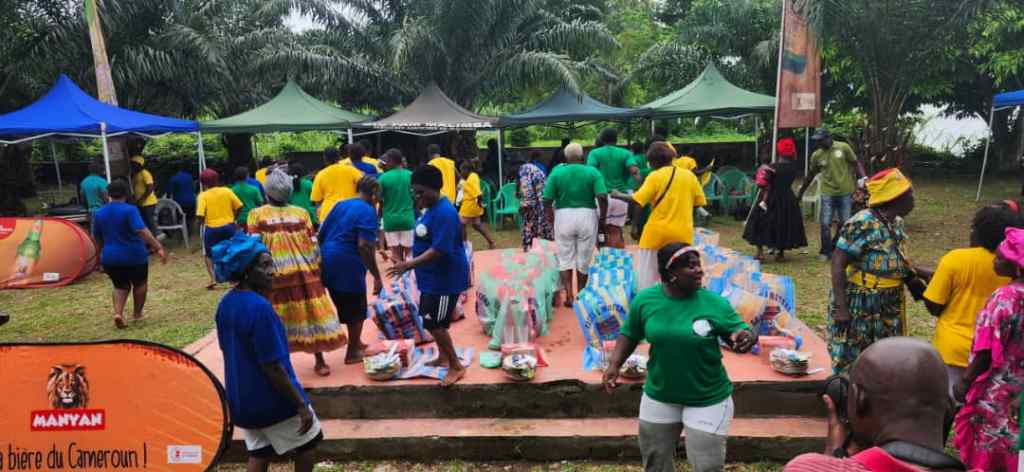
The 17th edition of FENAGIN (the Malimba Women’s Nautical Festival) unfolded not merely as a celebration, but as a strategic communal experience. Structured around three functional sequences, the event followed an initiatory logic: moving from internal preparation to public discourse, and finally, to a vibrant cultural demonstration.However,the festival’s timeline reflects a tripartite conception of community growth. The event opened with workshops, worship services, and the Pirogue Vigil, a phase serving as a spiritual anchor connecting the living with the memory of their ancestors. The official ceremony then shifted toward reflection. Under the theme “Women, Green Energy, and Empowerment,” leaders established a diagnostic framework for the community’s future. Finally, the program culminated in a “cultural deployment”dances, mermaid parades, and the signature canoe races ending with the distribution of donations to materialize collective support.Meanwhile,by weaving together the invisible (spirituality), the discursive (speeches), and the visible(the races), FENAGIN transforms the water from a simple resource into a territorial and identity-defining thread.Manyaka Madeleine, President of Malimba Expression, opened the festival with a posture of solemnity and grit. She framed FENAGIN’s 17 year history as a “constant struggle” for empowerment waged despite limited resources. Her message to the authorities was blunt: “The time for observation must give way to the time for action. Supporting FENAGIN is an investment in social stability.”Providing a frank analysis of rural realities,Ms. Ewane addressed the intersection of youth unemployment and female vulnerability.
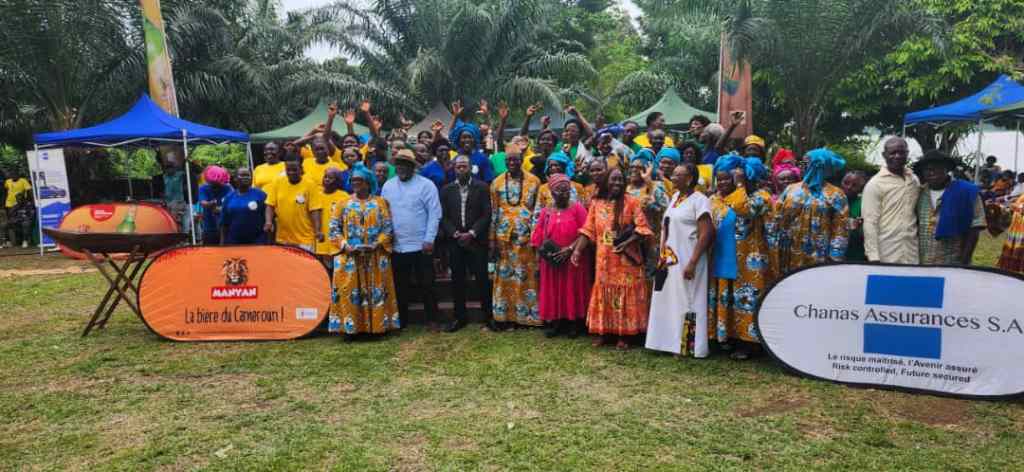
She positioned green energy not just as a technical upgrade, but as a human rights lever—reducing physical fatigue while increasing economic efficiency. Her core philosophy resonated across the riverbanks:”An independent woman stabilizes the family; a well-supported youth secures the community.”Pierre Ebwea, Mayor of the Rural Community of Mouanko, praised the festival’s “upward leap” in quality. He noted that the economy of the Mouanko community rests heavily on the Malimba canton, specifically its women. He reaffirmed the commune’s commitment to providing equipment and infrastructure, ensuring the movement for self-reliance remains constant.Nevertheless,the Parade of the Water Nymphs was the aesthetic heart of the festival. Barefoot and dressed in symbolic blue, the women led a procession with ritual poles, their steps deliberate and prayerful. They were followed by waves of youth in vibrant yellow and elders in soothing green, creating a living tapestry of the Malimba imagination.Under a sweeping sky, the river became a stage for the Canoe Race. Long pirogues, manned by crews in synchronized rhythm, cut through the water with determination. In the foreground, the green and blue canoes battled for dominance while spectators in smaller boats cheered from the sidelines. The race served as a metaphor for the community itself: progress determined by precision, team spirit, and collective strength.As the 17th edition concluded, a poignant theme emerged: transmission. At 64, Manyaka Madeleine spoke candidly about the physical toll of her leadership and the urgent need for a new generation to take the oars.”I am searching for young people who can replace me,” she confided. Though the community remains hesitant to let her step down, her plea highlights the festival’s ultimate goal: ensuring that the flame of Malimba identity and the drive for modern empowerment continue to burn long after the final canoe has docked.
 Visionary Reports
Leave a comment