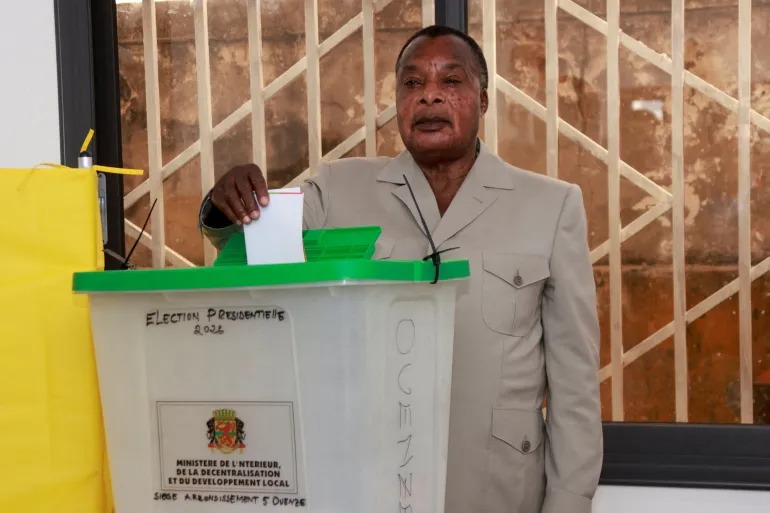
Provisional results from Congo’s March 15, 2026 presidential election placed incumbent Denis Sassou Nguesso at the top position, securing a decisive first round victory, securing 94.82% of the votes cast nationwide. The official tally, published by Minister of the Interior Raymond Zephirin Mboulou through Télé Congo, confirms his re election for another five year term, pending validation by the Constitutional Court.
Record High Turnout Amid Serene Polling
As per official data proclaimed by the Ministry of the Interior, national turnout reached 84.65%, with 2,681,587 voters out of 3,167,909 registered casting their ballots. Of those, 2,644,013 votes were counted as valid and expressed, while 37,574 ballots were annulled.International observers and domestic monitoring bodies described the voting environment as calm and orderly, with no evidence of systemic fraud or major irregularities capable of overturning the overall outcome. In a press conference on Tuesday, March 17, 2026, former Ghanaian President Nana Addo Dankwa Akufo-Addo, head of the AU observer mission to Congo, praised the peaceful conduct of the polls, stating: “The mission is pleased with the calm and secure atmosphere that prevailed throughout the ballot, which took place in an environment of order, peace, and transparency. 13 out of the 15 departments were covered by observers. The mission expresses its full gratitude to the competent authorities and to the population of the Republic of Congo for the political maturity demonstrated in the electoral process.”
Landslide Victory Across All Departments
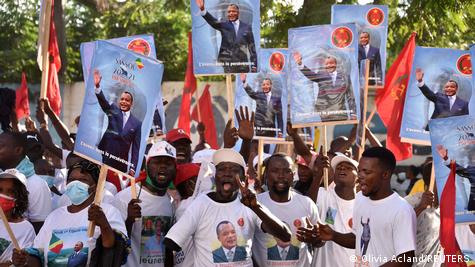
The official tally from the Ministry of the Interior reveals Sassou Nguesso’s dominance was reflected in every one of Congo’s departments, where he obtained well above 80% of the votes in nearly all zones and above 95% in several regions. Per the report, the strongest backing came from interior departments such as Likouala, Cuvette, and Plateaux, where support for the incumbent soared close to or above 99%. Even in more urbanized or traditionally mixed loyalty areas like Brazzaville and Pointe Noire, his share remained above 89%, underscoring broad geographic consolidation of his base.
Opposition Fragmentation and Marginal Gains
The six opposition candidates together obtained less than 5.2% of the total votes, with the best placed challenger, Mavoungou Zinga Mabio, securing only 1.48%. Other contenders, including Joseph Kignoumbi Kia Mboungou, Uphrem Dave Mafoula, Destin Gavet, Manangou Vivien Romain, and Nganguia Engambe Anguios, each obtained less than 1% nationally. This outcome reflects both the fragmented opposition landscape and the will of the people of Congo.A Vote Largely in Line with Pre Election TrendsThe final percentages closely mirror the pre election atmosphere, where national surveys and political analysts had projected Sassou Nguesso’s support in the mid to high 80s. His re election thus appears less as a surprise and more as confirmation of a leadership that has created impact in Congo despite prevailing challenges.Sassou Nguesso’s re-election provides a legal framework for him to solidify Congo’s national and foreign policy stances, ensuring a development-centric leadership. Recalling that on election day, the president emphasized continuity in foreign policy—particularly with partners such as the Russian Federation—while promising to pursue stability and economic development over the next five years.Challenges and Controversies Surrounding the PollDespite the high turnout and orderly voting, the election was not without difficulties. Several polling stations reported delays in opening, and voters encountered logistical hiccups linked to voter card distribution and matching. A nationwide internet blackout was also implemented during the vote, officially justified as a measure against disinformation but criticized for slowing communication and affecting business and emergency services.
From Provisional Results to Final Validation
The Ministry of the Interior’s provisional figures are now awaiting formal review by the Constitutional Court, which is expected to confirm the results within the legal timeframe. Defeated candidates have the right to file appeals, but the scale of Sassou Nguesso’s margin makes a reversal highly unlikely. Once validated, the announcement will clear the path for his inauguration and the continuation of his leadership since 1979.
Interconnected Stakes of Elections
With ever-growing global changes and strategic positioning, election stakes have shifted from mere personalities to systematic analysis of key indicators like effective public policy, diplomacy, foreign policy, and international alignments that serve national interests. Without undermining opposition or international NGOs’ governance concerns, elections are not just a litmus test for Western-style democracy—they embody a nation’s strategic, sustainable political agenda, blending public and foreign policy tactics for peace and progress. Enshrined in Denis Sassou Nguesso’s 2026 campaign philosophy, “En Toute Transparence,” this mandate promises economic buoyancy, clear political trajectory, people-centric policies, and sustainable growth.
What the Vote Means for Congo’s Future
With Sassou Nguesso projected to serve what is officially framed as his final constitutional term, attention is shifting toward questions of succession, institutional stability, and the pace of economic reforms. Oil dependent revenues have stabilised after a prolonged recession. The Central African nation harbours one of the largest oil reserves in sub-Saharan Africa, a valuable asset that can transform the status quo of Congo. Governance style and state priorities will however determine the pattern of affairs in the country. Notwithstanding, the provisional 2026 results signal that the immediate priority for many Congolese voters remains stability and continuity. It can be substantiated in the support for “Operation Zero Kuluna”—peace is indeed an asset. Nevertheless, critics urge deeper transparency, political opening, and more inclusivity in the next five years.
 Visionary Reports
Leave a comment