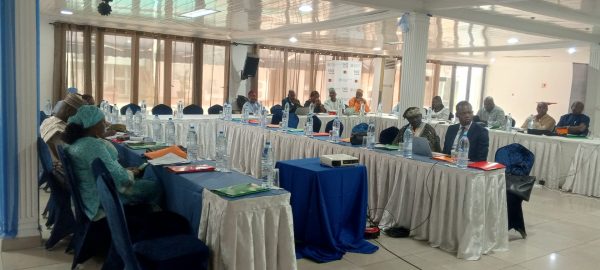
The issue of transhumance across the African continent remains a primary concern for regional decision-makers. To address this, stakeholders from Cameroon, Chad, and the Central African Republic (CAR) are currently meeting in Douala for a two-day brainstorming session aimed at proposing constructive policy frameworks to their respective governments.For decades, transhumance the seasonal movement of livestock has been a cornerstone of agropastoral systems in Central Africa. This mobility is vital for food security, economic resilience, and the socioeconomic stability of border regions.Also, the practice is increasingly fraught with challenges, including:Competition for natural resources (water and grazing land).Weak governance mechanisms.Cross-border insecurity fueled by armed groups and climate change.Since 2020, the Centre for Humanitarian Dialogue (HD), in collaboration with the FAO and MINUSCA, has supported a political and technical dialogue between CAR, Chad, and Cameroon. This process is part of the Political Agreement for Peace and Reconciliation (APPR-RCA), recognizing that violence linked to cross-border transhumance is a root cause of deteriorating intercommunal relations.Building on previous high-level meetings in N’Djamena (2022) and Bangui (2023), the current workshop focuses on the Project to Support the Regulation of Transboundary Transhumance (PARTTAC).
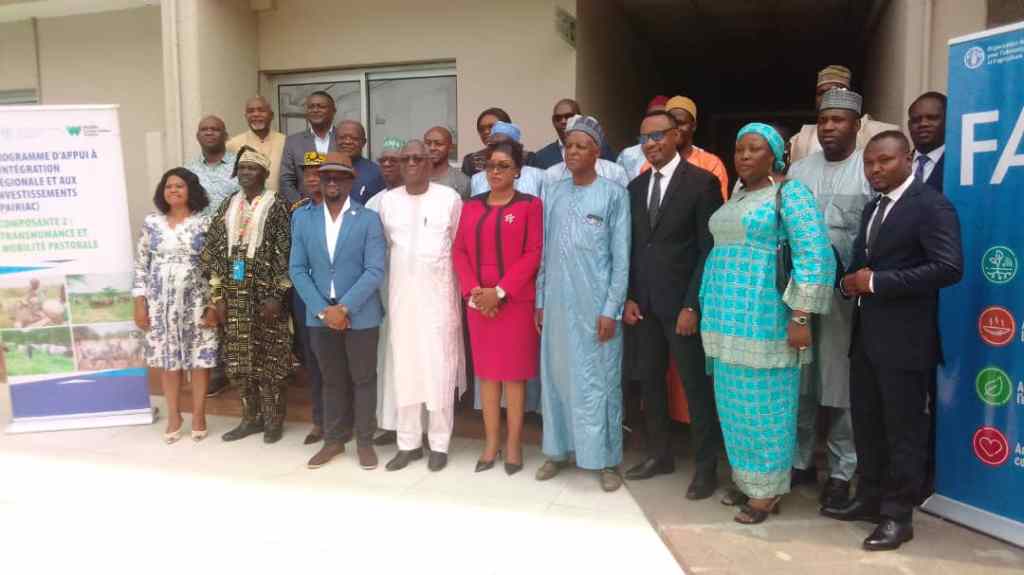
Funded by the European Union and implemented by the FAO, this project seeks to modernize regulatory mechanisms to fit current security and environmental realities. “Cameroon, Chad, and the CAR possess livestock herds of strategic importance for poverty reduction,” noted Gerard Toko, representing the FAO in Cameroon. “We are here to refine a joint sub-regional strategy that adapts to security and socio-economic realities, ensuring transhumance remains a driver of development rather than a source of conflict.”However,Hongla Annie Claire, representing Cameroon’s Minister of Livestock, Fisheries, and Animal Industries, emphasized the economic stakes: Transhumance is a driver of rural development and climate change adaptation. Our goal is an integrated approach that reconciles the preservation of natural resources with the security of our populations.”The stakeholders are reviewing a strategic document centered on five key pillars: Aligning national laws and strengthening cross-border coordination. Mapping and securing official grazing corridors and water points. Expanding community awareness and local mediation. Integrating transhumance into joint bilateral commissions. Implementing a code of conduct for security forces and creating specialized units.Meanwhile,the Douala conclave aims to produce a consolidated national position to be presented at an upcoming high-level sub-regional dialogue in N’Djamena. Key objectives include: Validation of the Joint Strategy for Transboundary and Transhumance.The establishment of a national roadmap with clear monitoring indicators.By transforming transhumance from a point of friction into a factor of regional integration, these three nations hope to secure the livelihoods of millions and stabilize one of Africa’s most volatile corridors.
 Visionary Reports
Leave a comment