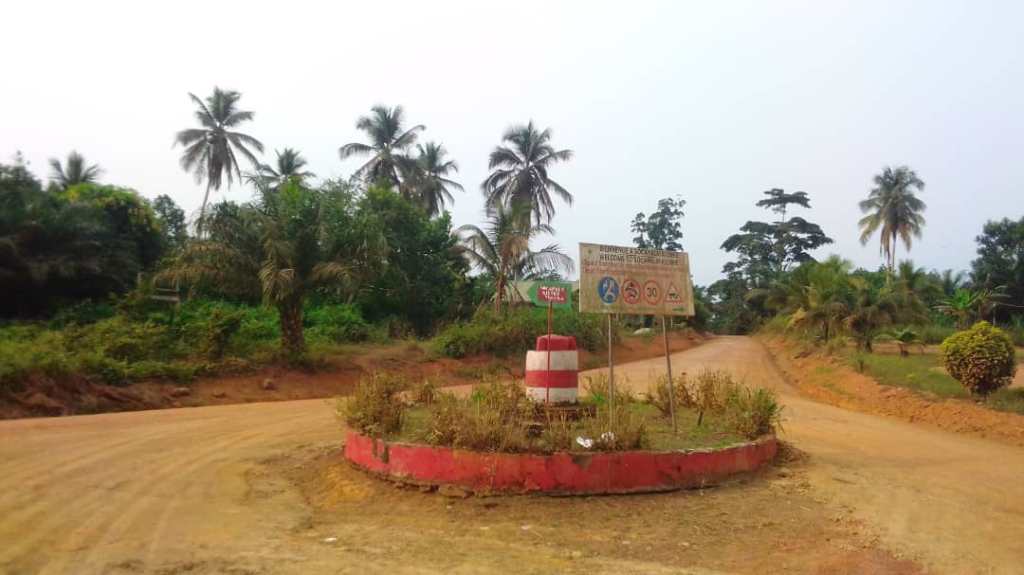
The legal dispute between Cameroon’s palm oil giant Socapalm and French lawyer Mr Fiodor Rilov has taken a controversial turn. While legal proceedings remain pending before a French court over allegations of environmental pollution and land scarcity, community leaders and residents of the Ocean Division in Cameroon’s South Region have spoken out. They claim they were misled and drawn into legal action they neither initiated nor support.The dispute dates back to 2009, when Mr Siungang David, a native of Poungou Aviation residing in France, filed a complaint with the OECD concerning the environmental impact of Socapalm’s activities. Although the OECD-led mediation led Socapalm a subsidiary of the Socfin Group to acknowledge certain shortcomings, the situation evolved with the involvement of NGOs and international lawyers.According to Mr Hervé César, President of the Lendi Aviation Development Committee, the legal proceedings initiated in France do not reflect the true wishes of the communities concerned.“Lawyer Fiodor Rilov and a local intermediary, Mr Biyong, went door to door meeting people individually,” he explained. “They claimed that the environment was polluted and promised compensation of €20,000 per person. Subsequently, we heard that money had been distributed, but here in Poungou, no one received a single franc. We are surprised to find ourselves involved in a case before a French court that we never initiated.”The investigation highlights growing frustration among villagers who discovered their names on legal documents without having given informed consent. Mr Sabonguie Nicolas, a resident of Lendi Aviation, described the NGO’s methods as “blackmail”.“I was shocked to see my name on a list of beneficiaries,” he said. “It is true that we face problems with flies and pollution; sometimes candles have to be lit just to be able to eat because of the insects. But I never agreed to this legal action. When the Divisional Officer informed me that I was supposedly entitled to 560,000 CFA francs, I refused. I cannot commit myself to something I do not understand.”In response to the situation, local authorities are calling for a return to dialogue through the Multi-Stakeholder Consultation Platform, a local mediation mechanism chaired by the Senior Divisional Officer of the Ocean Division.
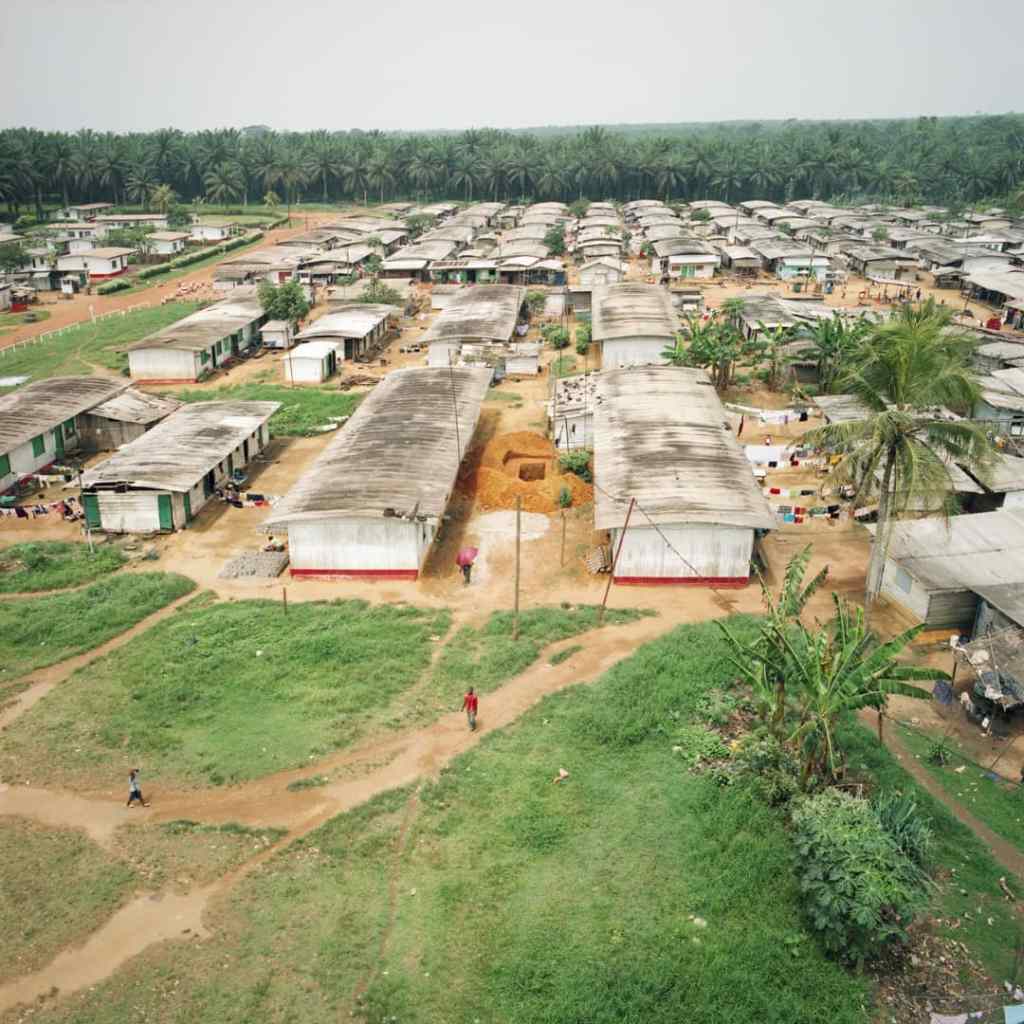
However, Mr Yebga Ngos Mathieu Brice, Divisional Officer for Lokoundjé, expressed scepticism regarding the relevance of the proceedings brought in France.“The administration has already established frameworks for discussion on corporate social responsibility and environmental concerns. It is surprising to see these matters transferred to France. Many communities now acknowledge that they do not recognize themselves in the complaints filed under the French law.”The Divisional Officer of Kribi I echoed this position, calling for community issues to be managed locally:“The challenges associated with Socapalm are typical of large industrial plantations and should be addressed locally. There is no need to go to Paris to lodge a complaint. Let us stop instrumentalising the population. Dirty laundry should be washed within the family.”While acknowledging that the environmental impact of plantations remains a daily reality for the villages of Poungou, Lendi and Kienké, Socapalm stresses that it acts on a daily basis to strengthen and improve the mechanisms in place for environmental protection. The company states that it continuously invests in preventing and reducing nuisances, monitoring the environmental performance of its production sites and improving its practices, in compliance with Cameroonian legislation and the international standards to which it adheres, while prioritising dialogue with neighbouring communities.Moreover, many local leaders continue to defend Socapalm’s presence, citing job creation and the implementation of community development projects in the area.For his part, His Royal Highness Louoh Clément, traditional ruler of Lendi Aviation, stated that he was never officially contacted by the NGO, only learning of its activities after it had left the village. Meanwhile, Mr Biyong, cited as a local intermediary in the documents, declined to comment as part of this investigation.As the French court prepares to deliver its ruling, the commotion observed in Kribi highlights the deep divide between international legal activism and the immediate, practical needs of local communities caught in the middle of this dispute.
 Visionary Reports
Leave a comment