
Media practitioners in Douala have been drilled on the 2026 Cameroon Finance Law . This was during a workshop organised by the Cameroon Association of English Speaking Journalists (CAMASEJ) Douala chapter that took place on Saturday January 17. During the workshop, journalists and economic analysts came together to dissect the intricacies of Cameroon’s financial framework. As understanding the budget is crucial, especially for those tasked with reporting on its complexities. The journalists were drilled on the implications, challenges, and necessary innovations in the 2026 budget The state budget serves not only as a financial plan but also as a blueprint of the government’s priorities. Consequently understanding its main figures,such as potential revenue and expenditure is essential. Current statistics indicate a pressing need for reform, particularly in transitioning from an informal economy to a more robust formal sector. It is on record that the 2026 budget of Cameroon stands at FCFA 8,816.4 billion (approximately $14.7 billion), representing a 14% increase compared to the 2025 budget. To meet the budgetary requirements and cover the financial gap, the government plans to borrow approximately FCFA 3,104.2 billion. With the above statistics, the main resource person during the workshop seasoned economist and University lecturer Professor Louis Marie kakdeu explained that the 2026 finance Law is not Inclusive. He took time off to explain the three major categories of the budget including the initial budget law which is the budget voted in parliament, the amending finance Law which is the law set to amend the budget law as a result of unplanned happenings and the settlement law which is the record of the results of the execution of the finance law.He also elaborated on the 11 legal framework of the budget and how it is implemented and how it works in Cameroon. While discussing the major innovations he added that Cameroon’s 2026 Finance Law introduces a Special Fund for Youth & Women’s Empowerment, boosts revenue with higher excise duties on alcohol & increased land forfeiture fees, strengthens customs & tax enforcement, introduces a digital services tax (DST) via a Significant Economic Presence (SEP) standard, and advances decentralization with regional tax revenue transfers, all aimed at social development, revenue mobilization, and fiscal control.Professor Louis Marie kakdeu regretted that a staggering 80% of small businesses in Cameroon are reported to operate in the informal sector often resulting in a high failure rate as they transition to the formal economy. The potential for revenue generation remains immense; with 3.5 million informal tax units identified, a significant increase in taxpayer contributions could lead to the state budget being doubled or tripled without complications.It also came out from the workshop that, currently, the burden on formal sector taxpayers is perceived as excessively heavy. Many individuals find it more advantageous to remain in the informal economy, where tax incentives are more appealing. This disincentivizes the necessary migration to the formal sector, where appropriate taxation and regulatory oversight could lead to more sustainable economic growth.
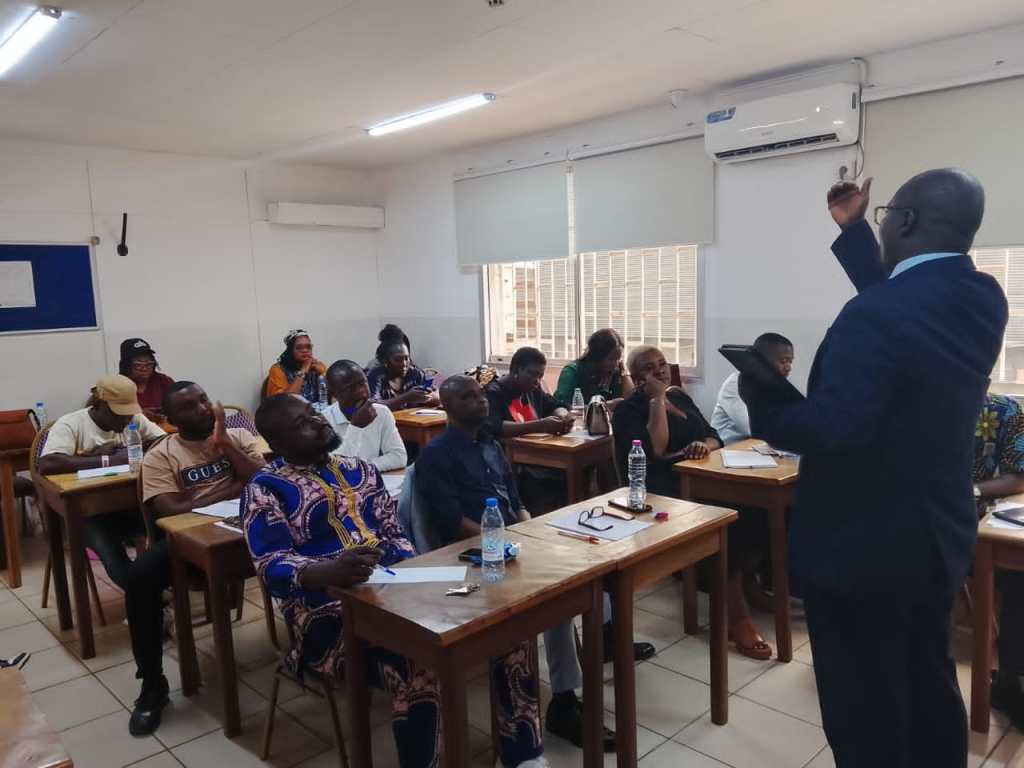
Both the positive and challenges of the budget were diagnosed and at the end of the workshop participants highlighted the pressing necessity for reform. With a collective effort from government, journalists, and economic stakeholders, the nation can transition towards a more inclusive and productive economy. CAMASEJ Douala chapter President Maureen Ndi thanked the resource person and participants. She said the knowledge gained will permit journalists report properly for the understanding of the ordinary citizens .
 Visionary Reports
Leave a comment