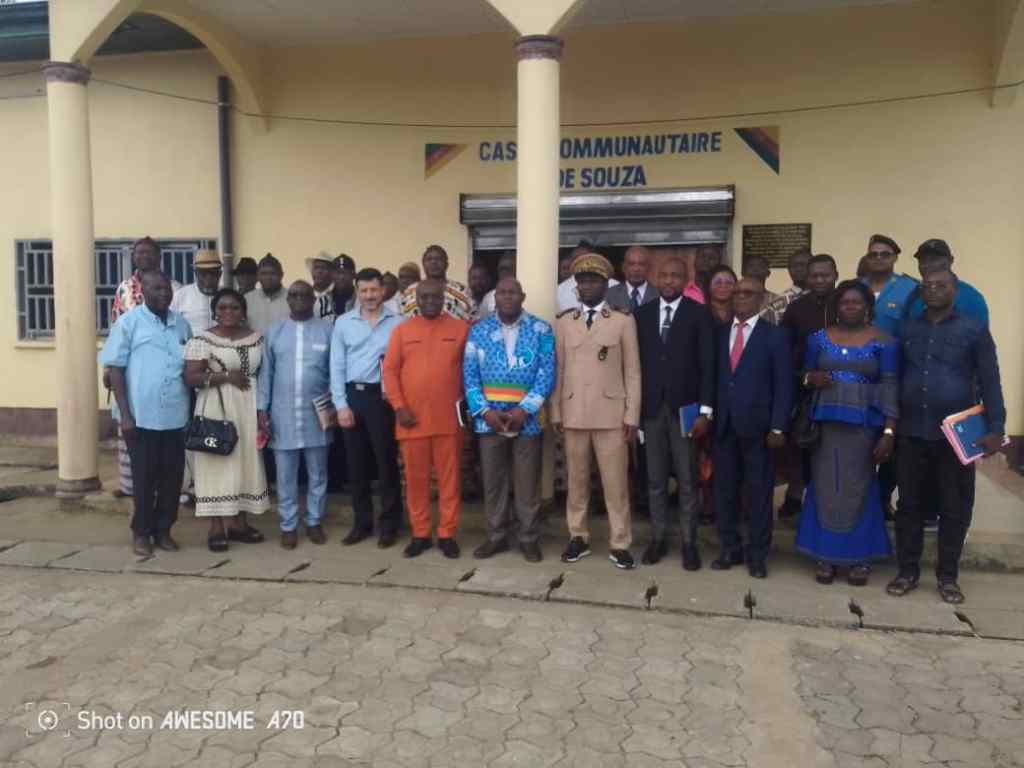
In a move aimed at easing decades of local friction, SOCAPALM, Cameroon’s palm oil titan, has officially returned over 2,566 hectares of land to the State. The announcement came during a tripartite meeting on Wednesday, January 21, 2026, where land registry services presented a definitive report on boundaries at the Dibombari site.Furthermore,the report initiated by the company itself, clarifies a significant shift in land holdings. From an original concession of 11,210 hectares, SOCAPALM’s footprint in the Dibombari subdivision has been refined to 8,643 hectares.The specific area returned to State control calculated at 2,566 hectares, 93 ares, and 49 centiares is the result of an extensive effort to increase the density of boundary markers and precisely define active exploitation zones.

The meeting, chaired by the Senior Divisional Officer of Moungo Stephane Ndjana, brought together administrative authorities, traditional rulers, local elites, and community representatives. This inclusive approach is part of a broader strategy Socapalm has pursued since 2017 to resolve land disputes. “This voluntary return of unexploited land reflects Socapalm’s firm commitment to transparency,” stated Barbara Lienoue, Socapalm’s Communications Manager. “We aim to permanently resolve misunderstandings and tensions that have historically clouded local relations. This is about shared and responsible development.”While the local population largely welcomed the return of ancestral lands, the move has sparked a debate over Cameroon’s economic future. Critics worry that shrinking plantations will exacerbate the nation’s reliance on imports. Less than 200,000 tons annually. Estimated at 1.17 million tons. A widening deficit that could hit household budgets through higher prices.”If the state and communities continue to reclaim land, Socapalm may soon be importing 80% of our oil,” warned observer who decided to be unanimous. He argued that instead of reducing acreage, the focus should be on expanding cultivated areas to meet soaring consumer demand.Socapalm has confirmed that this “land clarification” process is not limited to Dibombari. The company plans to gradually review and restore unexploited areas across all its operational sites in Cameroon.By addressing the grievances of communities who felt “cheated by their forebears,” Socapalm is betting that social peace is worth the price of a smaller footprint. However, the State now faces the challenge of managing these returned lands while ensuring the country’s food sovereignty isn’t compromised.
 Visionary Reports
Leave a comment