Gathered in Lusaka Zambia under the auspices of AKINA MAMA wa AFRIKA, from September 30 to October 2nd 2025, they were looking at how to tackle illicit financial flows, economic justice, climate finance, and the need to establish a just global financial framework that prioritizes people and planet.

They were more than 50 African feminists, radical thinkers, economic justice advocates, civil society actors, policymakers, and academics and grassroots activists from around the continent who gathered in Lusaka, Zambia for the discussions. According to organizers, Akina Mama wa Afrika, a Pan African leadership development organization founded in 1985 by a group of African women living in the diaspora, they drew inspiration from movements like the jubilee 2000 Debt Campaign and the systemic failures of institutions like the International Monetary Fund (IMF),World Bank and the World Trade Organization (WTO). The Rethink Space is thus to offer women the opportunity to challenge the legitimacy of these institutions and propose alternative and just economic systems. Amongst the issues on the table of discussion was fiscal sovereignty and how Africa can reclaim it. According to Hon. Dr KHANYISILE LITCHFIELD-TSHABALALA, a pan-Africanist and South African member of parliament, for Africa to achieve that, it must decolonise land ownership, as well as the ownership of its raw materials, decide who buys them and above all, determine its tax laws without any external influence. To Dr Khanyisile, if Africa has control over these three things ( Land, Laws, and Resource), it will be unstoppable. She also called for multinationals to be taxed, and African countries should stop relying on debts and aides.To her, Africa should not pay any debts because the continent does not owe the Western world, as 92% of the artifacts in Africa are with them.Africa also can not be fiscally sovereign unless it resists external influence and creates a continental financing mechanism. They acknowledged that though the AU has established a development fund, it is largely funded externally. The AU Fund has to be nurtured and campaigned for but more importantly tied to domestic resource mobilisation. The participants, mostly feminists urged African countries to start collecting domestic revenue by taxing multinationals and the wealthy, to ensure that the AU fund does not remain on paper because African need the funds as it is from there, where African countries could borrow from rather than borrow from the IMF. The Feminists noted that they have an opportunity to start a campaign that tells African governments not to pay debt. In this light, African countries were urged to stand in solidarity to demand reparations, which should commence at domestic levels through parliamentary procedures. This they explained is because it has to be legislated through the reparation committees in parliament set up to facilitate the legal process.
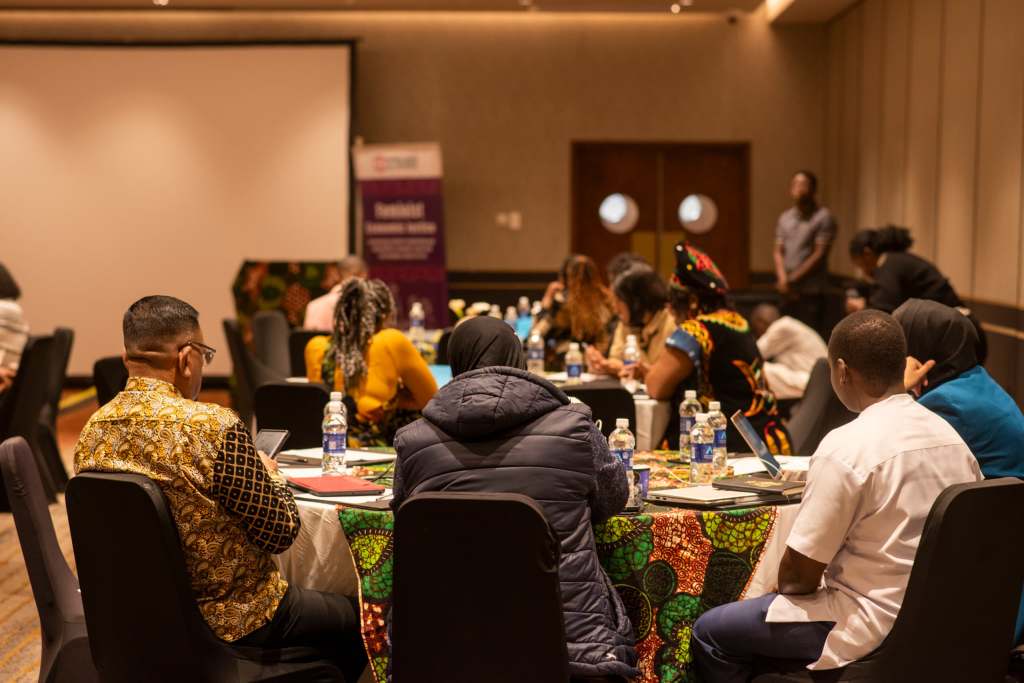
Cross section of participants during working sessions
On reclaiming fiscal justice in climate finance, Maria Nkonjera of the African Futures Policies Hub highlighted the landscape of international cooperation, the African situation in the multilateral financing. Issues regarding taxing for climate justice and carbon markets were also discussed at the come together.The rethinking space on Reclaiming Africa’s Fiscal Sovereignty ended with regional consultations where the participants imagined an Africa without borders where people and resources flow in solidarity. Closing the meeting on behalf of the convener Akina Mama wa Afrika, Sarah Nanyondo thanked all for participating and said a strategy paper on the Feminists call to action will be presented to the United Nations Tax Convention.
 Visionary Reports
Leave a comment