The AfricAvenir International Foundation has established an annual tradition on August 28 to honor the resistance of Cameroonian forefathers against colonial rule from 1884 to 1959. This year’s event in 2025 brought together traditional rulers from the Sawa clan, historians, and researchers to discuss the history of Cameroon and the restitution of African artifacts stolen during the colonial period.The resistance to German colonization began on August 28, 1884, on the banks of the Wouri River, led by Lock Priso Bell Kum’a Mlupe and Elame Joss. This initial act of defiance sparked a 32-year struggle that spread throughout Cameroon. The event highlighted the significant contribution of the Great Sawa people in this fierce fight for independence, which challenged German authority long before the end of World War I.
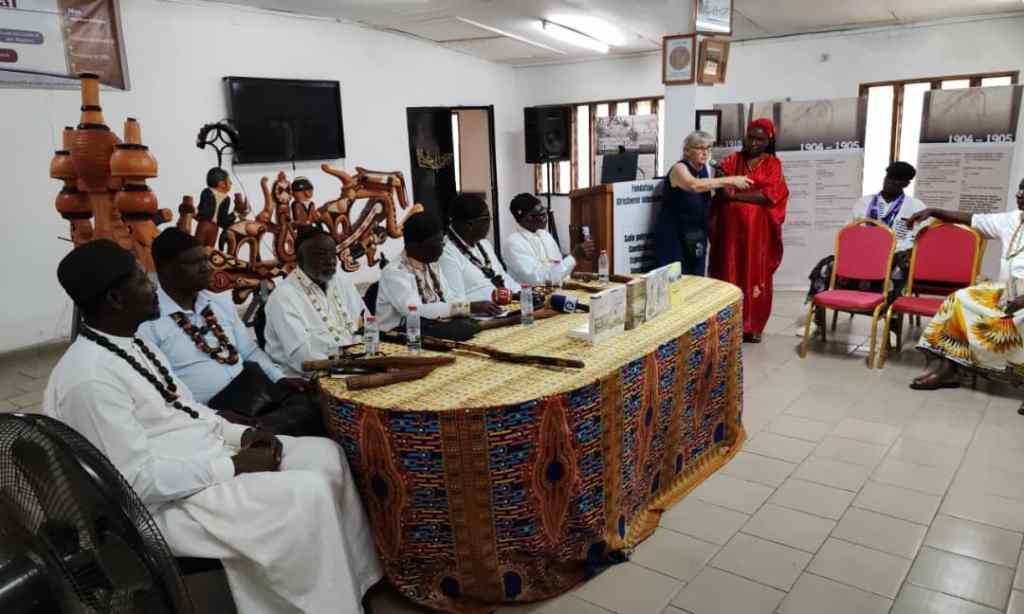
A key topic of discussion was the massive theft of over 60,000 objects of power, worship, and art from the Cameroonian people by the Germans. The role of missionaries, administrators, scientists, and travelers in this cultural dispossession was also examined.However,since 1970, Prince Kum’a Ndumbe III has been a leading voice, calling on German governments in his publications to acknowledge their role in the destabilization of Cameroon. Since 1998, he has demanded the return of stolen artifacts and reparations. This tireless effort has spanned 55 years.In a significant step, the Government of the Republic of Cameroon established an inter-ministerial committee on October 6, 2022, to oversee the repatriation of Cameroonian cultural objects illegally taken abroad. Negotiations with the Federal Republic of Germany are ongoing, with a first conclusion anticipated in September 2025.The 2025 event focused on the Great Sawa, revealing the stories of their little-known heroes. This follows tributes to the Ekong resistance fighters in 2019 and those from the Great North in 2024. This effort aims to help Cameroonians reconnect with their history and prepare for the challenges of the restitution process.As Prince Kum’a Ndumbe III stated, a solid future for Cameroon cannot be built without understanding its past. The event was attended by Sawa royal houses, chiefs, experts, descendants of resistance heroes, political leaders, intellectuals, religious leaders, and museum professionals.Moreover,during his address, Prince Kum’a Ndumbe III shared insights into historical inaccuracies. He noted that many Cameroonians only know of Sarker, a boat mechanic who later became a missionary, while the earlier and more significant work of Joseph Merrick is often forgotten. He also corrected the misconception that German missionaries were the first to arrive in 1884, explaining that due to internal conflicts, Bismarck initially sent Swiss missionaries from the city of Basel.
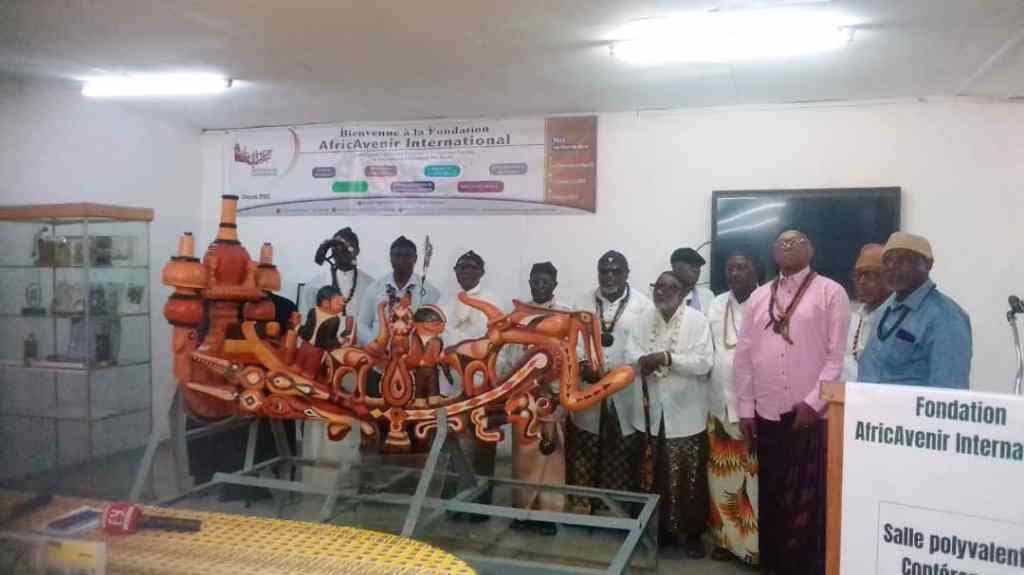
Prince Kum’a Ndumbe III read from historical documents, including a missionary’s own words that revealed their intent to quickly seize masks and other artifacts. The account described how newly converted Christians would break into homes to steal traditional objects like uniforms, raffia, and pagan figures, highlighting the collaboration between missionaries and local converts in the colonial theft.Prince Kum’a Ndumbe III emphasized the need for Cameroonians to reclaim their history. He recounted how Lock Priso Bell, in a written declaration on August 28, 1884, became the first Cameroonian to formally reject colonization, refusing German money and insisting on freedom. He criticized the educational system for not teaching the widespread resistance that occurred throughout Cameroon over 32 years.Nevertheless,addressing the youth, he stressed the importance of knowing their history to avoid being dominated. He pointed out that while previous generations only had colonial books, young people today have access to a wealth of resources, including publications from scholars like Cheikh Anta Diop. He challenged the youth to excel on a global scale, not just locally, by using the knowledge and resources that have been made available to them.He concluded with a powerful statement, criticizing the lack of historical knowledge among young Cameroonians despite the extensive work of local scholars. As he put it, holding a diploma without knowing one’s own history is akin to being an “illiterate with a degree.” He urged the younger generation to take up the challenge of learning their history to achieve true freedom and independence.
 Visionary Reports
Leave a comment