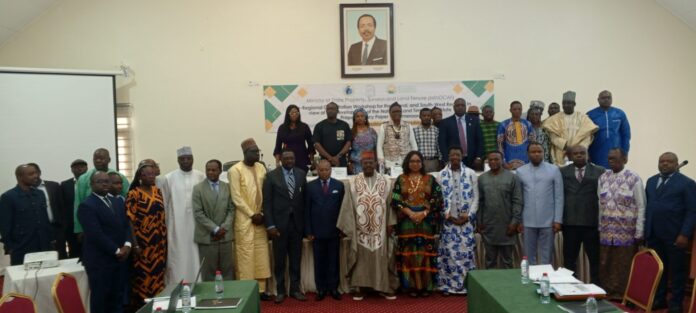
The city of Douala recently hosted an important interregional workshop between August 20-21,2025, bringing together stakeholders from the Littoral and Southwest regions to shape a new National Land Policy Document for Cameroon. This high-level meeting, chaired by Littoral Region Governor Samuel Dieudonné Ivaha Diboua, signals the government’s commitment to fundamentally overhauling its land management framework.The formal opening of the workshop featured significant contributions from key figures. Christian PORO, Project Manager for the “Local Consultations for an Inclusive Land Policy in Cameroon (LOCIL)” project, spoke on behalf of Action pour le Développement Communautaire (ADC) / RRI. He emphasized the critical importance of this consultation for creating a truly inclusive land policy.Furthermore,Mr.PORO highlighted the unwavering commitment of the ADC, a Garoua-based Cameroonian association, to supporting public authorities in developing and implementing public policies. He detailed the crucial role of the LOCIL project which is funded by the Coalition Rights and Resources Initiative (RRI). Through a participatory approach, ADC visited 15 districts across Fako, Moungo, Sanaga Maritime, and Wouri Divisions to gather the concerns and aspirations of local populations.
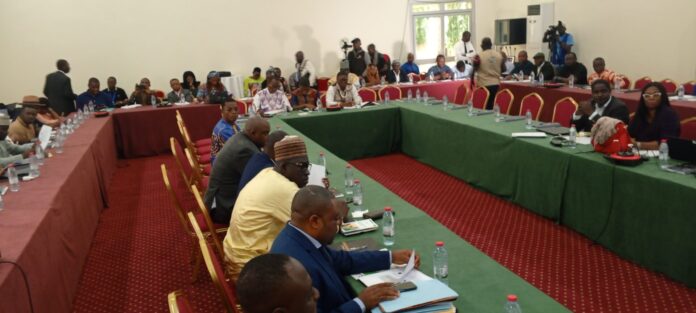
This extensive outreach culminated in a substantial proposal note that will directly inform the discussions and next steps for Cameroon’s new land and state property policy.In addition,Constante Clarisse KAMGANG, Head of the Studies, Planning, and Cooperation Division at MINDCAF, praised the concerted and inclusive approach. She underscored the need for such collaboration to ensure successful land reform and acknowledged the presence of diverse stakeholders, including regional and local government leaders, traditional leaders, civil society, and technical and financial partners.The Douala workshop is the third in a series of national consultations initiated by MINDCAF. The first meetings were held in Ebolowa for the Centre, South and East regions, followed by Garoua for the northern regions. This stage in Douala marks a significant step toward creating a modern legal framework that is better adapted to local realities across the country.The stakes of this reform are high with the new policy aiming to Secure land rights,Promote sustainable economic and social development,Protect the environment and combat deforestation,Address climate change, Fight corruption and resolve land-related conflicts.
Ultimately, the goal is to create a land policy that is not only fair and equitable but also environmentally friendly and capable of guaranteeing food security.Meanwhile,the contributions from this workshop will be integrated into the final National Land Policy Document, which will then be submitted for approval by the highest government authorities. The implementation of this policy will be a decisive step in Cameroon’s development and the consolidation of its governance model.This reform represents more than a technical or legal undertaking; it is a profound social issue that requires a shift in mindsets and practices, along with strengthening trust among all actors. The involvement of local populations, civil society organizations, and the private sector is essential for the success of this ambitious project. Thus,the Douala workshop is a vital step in this complex journey, offering hope for a more prosperous future for all Cameroonians, provided that political will translates into concrete and inclusive action
By Henry Wana
 Visionary Reports
Leave a comment