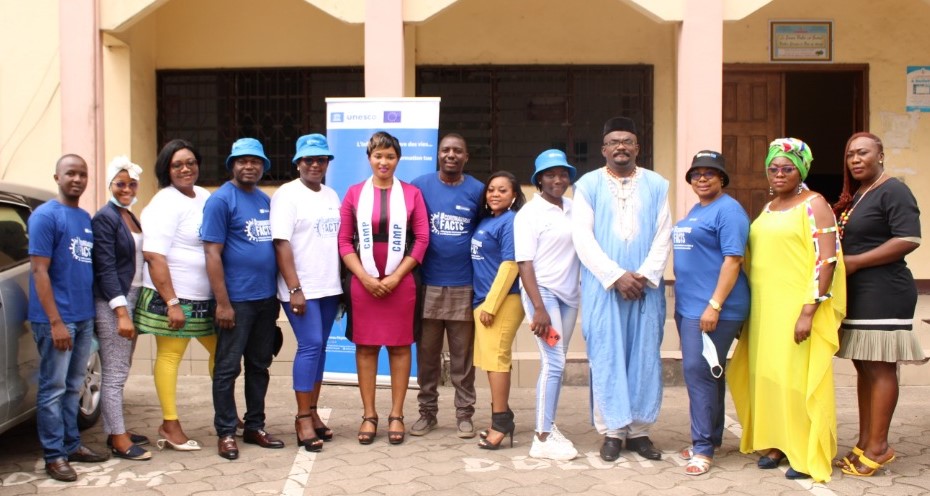
This was during a one day workshop organised in Douala recently

Of recent there has been an increase in the number of fake news and misinformation on the social media. The ssocial media has had a dramatic impact on the way people interact with one another. Social media platforms have connected people to one another in new and impactful ways. Stories and opinions just like fake news and misinformation has equally gain exposure with unprecedented speed, giving individuals around the globe continuous access to a near-real-time conversation about both important and trivial matters. Unfortunately, the dark side to social media such as fake news, misinformation is greatly influencing users negatively. Misinformation about Covid 19 has hit Cameroon hard that all efforts to get Cameroonians vaccinated against the deadly pandemic is proving difficult.
Against this backdrop, the association of Cameroon Media Professionals – CAMP with sponsorship from the European Union and UNESCO recently organized a one day workshop to train its members and non-members on “Fact checking Covid 19 related stories, fight infodemic and misinformation”. The workshop was there geared towards educating the media professionals on how to do credible stories and how to counteract misinformation on Covid 19 on social media.
According to the national vice president of CAMP Noela Ebob Bissong, a range of factors are currently transforming the communication landscape in Cameroon thus raising questions about the quality, impact and credibility of journalism. She further intimated that orchestrated campaigns are spreading untruths – disinformation, mal information and misinformation often unwittingly shared on social media creating a negative impact in the society. Thus she went on, it was necessary to equip media professionals on fact checking skills. She added that the training has come to build a strong network of fact checkers in crisis and Covid 19 response, share best practices and experiences in the different regions on the thematic and ensure effective and positive communication in line with Covid 19 reporting.
She added that similar workshops had taken place in Buea and Bamenda while hoping that at the end of the series of workshops there will be an improvement in the quality and quantity of fact based stories published online and offline related to the Covid 19 pandemic. It was an opportunity for the main resource person Laure Nganley of #Defyhatenow to trained the journalists oh how to detect fake news, she also handed down tools necessary to decipher fake news and how to do more credible stories.
By Gina ESONG
 Visionary Reports
Leave a comment