Food Safety Day2021
Agriculture and food safety security are characterized by a gendered dimension that play a key role in agricultural production, food processing and marketing. Women play a decisive role in the dietary diverts and are responsible for nutrition in the family and community at large.
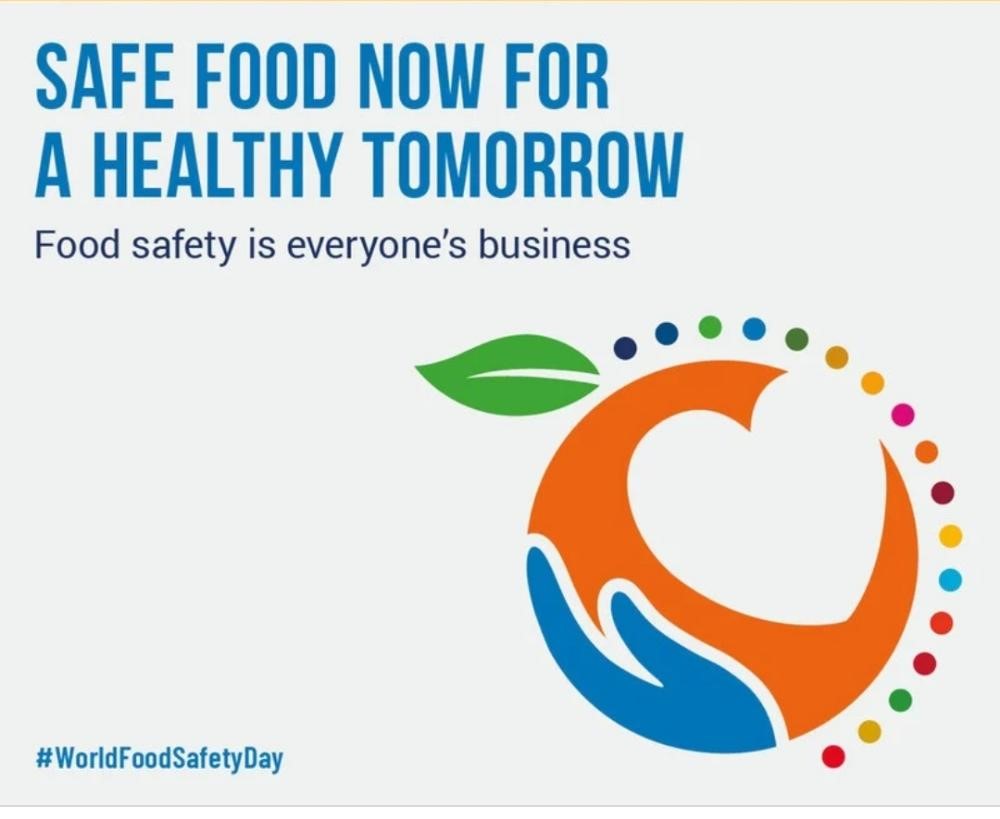
The world “Food Safety Day”, is celebrated each year on June 7th . The theme for this year’s international food safety day is “Safe Food Today for a Healthy Tomorrow “, and it’s aimed at drawing attention and inspiring actions to help prevent, direct and manage foodborne risks, thus contributing to food security, human health, economic prosperity, agricultural, access to the markets, tourism and sustainable development. The year’s theme highlights the need for women to have sustainable production systems to ensure the health of people, plants and the economy in the long term. It is important to recognize that the health of people, animals and environment is interconnected and any safety adverse effects may have a global impact on public health, trade and the economy at large. Women’s access to sufficient amounts of safe food is key to sustaining life and promoting good health.
In Africa and Cameroon in particular, women constitute the greater percentage in the private spheres and always take the lead as far as food safety is concerned. Women take active participation in the food safety chain as women are the ones who engage in cultivation, maintenance, harvesting, processing, storage, distribution, as well as the preparation and consumption.
Despite the significant roles women play in the food safety chain, women’s efforts towards food safety seems to be insignificant, difficult to access and unpaid. Women do not have just the responsibility to provide food, they also have the responsibility of making sure the food lasts for as long as they may want it to sustain the family and community at large. Despite women’s struggle, very little is being done to assist women in carrying out this great task. No programs or policies are put in place geared towards ensuring that women’s burdens are lessened in order to ensure a healthy society. Women face challenges regarding availability to resources, insignificant access , rare utilization rights to women which are the four food safety pillars.
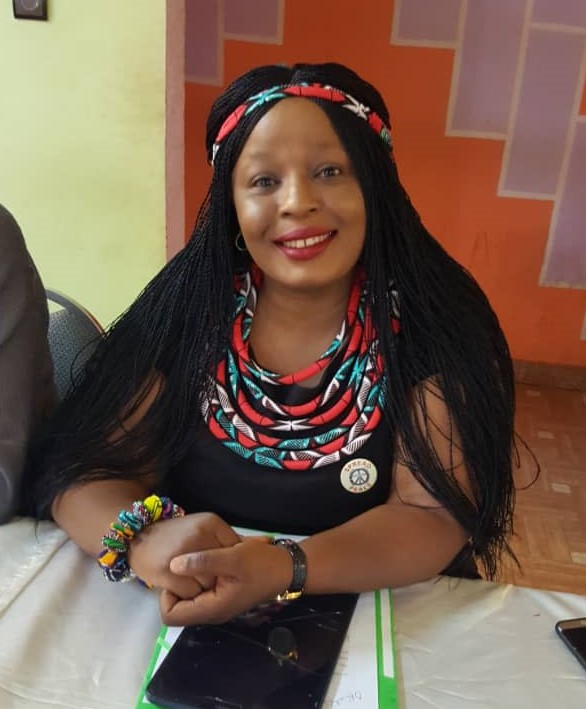
Looking at the deplorable conditions in which most women in Africa and Cameroon in particular are living in, and the theme for this year’s “World food safety day”, the Young African Women Congress Network Cameroon through its leadership, notes that very little has been done to ensure that this year’s theme becomes a reality. How can we be talking of “safe food today for a healthy tomorrow” when you can’t afford today’s food? Women are the ones who carry this burden on their shoulders and so a lot has to be done to make sure these women don’t bear the brunt of war, the Covid-19 pandemic and also the burden of ensuring food safety. “Celebrating the food safety day in Cameroon has actually been very challenging. Looking at the crisis that has gone on for over 4-5yrs in the Northwest and Southwest Regions of Cameroon that has eventually affected the entire country, food is now scarce, sometimes the quality is not there and lots of people are experiencing famine. Prices have gone up, food items are scarce because of the insecurity and impassable nature of our suburbs were roads have been blocked due to the crisis and insecurity and there is no way people can conveniently reach the cities. So I want to belief that, since this day is about ensuring safety of food for everyone and it should be everyone’s business, I think, the warring parties need to exercise restraint and not let the economic situation of the country be a target to the extent that the food that is supplied to every community is wanting. This is really a call for concern. Our living standard is getting more and more expensive and the living conditions poor, ” President of the YAWC Network Cameroon Chapter, Rosaline A Obah decries.
For an African and Cameroonian Woman in particular to be able to safe food today for a healthy tomorrow, then there must be a paradigm shift in the way resources are distributed between men and women. Women need to have physical and human capital as men to enable them work with ease thus making the community favourable and sustainable for all. Women need stronger and favourable land rights whereby both the civil law and the religious laws favour women’s land possession. The Livelihood of families in rural areas depends on women’s access to communal land, nearby forest, and water ways for the supply of food, fuel wood, water for domestic consumption and agricultural production, medicine and materials for craft production and house building. Women are granted only limited rights to these resources and their access is shrinking in the face of state takeovers and the shift from common property to private entitlement.
Women need to be provided with the appropriate equipment, technology and techniques to ensure that food is safe today for a healthy tomorrow thereby leading to a sustainable environment. Barriers that limits women from credit facilities should be removed thereby giving women the opportunity to get loans to be able to ensure that there is food safety. Very few women have the capacity and are knowledgeable of ways that can help them preserve food that can sustain the family and the community at large. Women have been overlooked as decision makers both at the farm level and at the policy level. For too long, much agricultural research has ignored the on-the-ground reality of farming systems and farmer preferences, resulting in lost opportunities and miscalculated priorities. International research centers have focused more on male farmers, the explicit inclusion of women’s knowledge and perspective in the process has been much slower and this delay remains an obstacle to meeting the needs of women producers.
We all have a role to play, from the farm to the table, to ensure that the food we eat is safe and does not harm our health. Safe food is essential to promote the health of consumers and to end hunger. The process of listening to – learning from – female farmers can be facilitated by increasing the representation of women in agricultural policymaking bodies.
By Violet Nyebe
 Visionary Reports
Leave a comment